Many people choose to live off the grid for many reasons. They want to be self-reliant and help the environment. In remote places, setting up an off-grid electrical system is often cheaper than using power lines.
Thank you for reading this post, don't forget to subscribe!Living off the grid is not just an ideal. It’s a smart choice for those who want to be independent.
For those interested in off-grid living, having a good power system is key. Renewable energy is very important for these homes.
Key Takeaways
- Off-grid living is chosen for self-reliance and environmental reasons.
- A standalone off-grid electrical system can be cost-effective in remote areas.
- Reliable power systems are key for off-grid homes.
- Renewable energy sources are important for powering off-grid homes.
- Off-grid living offers independence from public utilities.
Planning Your Off-Grid Power System
Off-grid power systems need careful planning. You must think about how much energy you use and your area’s weather. These systems work on their own, without the main electrical grid. They have parts that make, store, control, and send out electricity.
Assessing Your Energy Requirements
Figuring out how much energy you need is key. Start by looking at how much energy you use every day. Find out which appliances use the most power. For more info, check The Ultimate Guide to DIY Off-Grid Solar. It will help you figure out the right size for your system.
Climate and Location Considerations
Your location’s weather and geography matter a lot. Places with lots of sun are great for solar power
Solar Power: The Leading Off-Grid Energy Solution
Solar power is key for off-grid living, a cleaner choice than fossil fuels. It’s vital to know what makes a good off-grid solar system.
Essential Components of Off-Grid Solar Systems
An off-grid solar system has a few main parts. Solar panels turn sunlight into electricity. Knowing how solar panels work is key to getting more energy. You also need inverters to change DC to AC and battery banks to save extra energy.
| Component | Function | Importance |
|---|---|---|
| Solar Panels | Convert sunlight into electrical energy | High |
| Inverters | Convert DC power to AC | High |
| Battery Banks | Store excess energy for later use | High |
Solar Panel Placement and Efficiency
Where you put solar panels matters a lot. They should get lots of sunlight all day. 
Battery Banks for Energy Storage
Battery banks are key for off-grid systems. They save extra energy for when it’s dark or cloudy. How big and what kind of battery bank you need depends on your energy use and how independent you want to be.
Knowing about off-grid solar systems helps homeowners choose the right renewable energy setup.
Harnessing Wind Energy Off the Grid
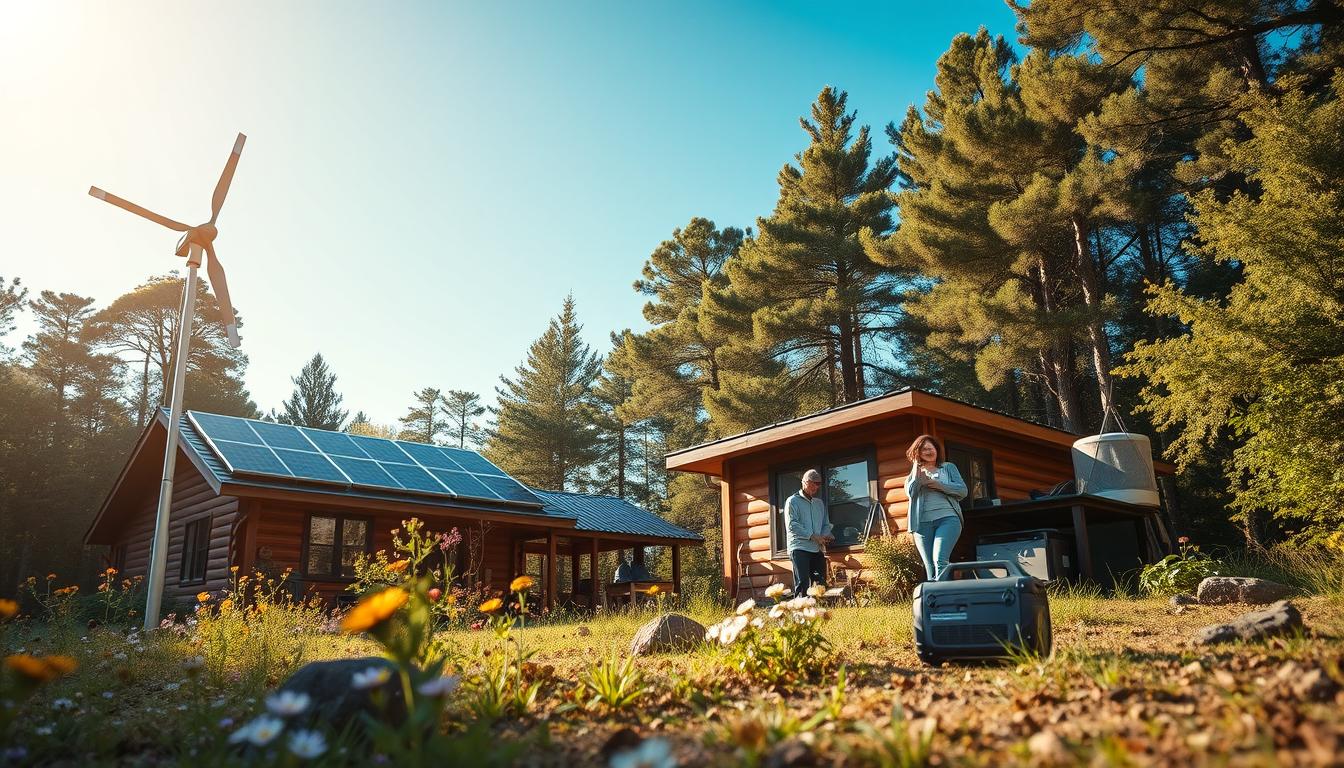
Wind energy is a great choice for off-grid homes. It’s clean and renewable. More people are choosing it to cut down on fossil fuels.
The success of wind energy depends on a few things. These include the wind speed in your area and the turbine’s design. Knowing these helps make the most of wind power.
Residential Wind Turbine Options
There are many types of residential wind turbines. They vary in size and design. Important factors include the turbine’s power output, rotor diameter, and tower height. A bigger rotor can catch more wind, and a taller tower can reach stronger winds.
Determining Wind Potentail for Your Location
It’s key to check your location’s wind before getting a turbine. You need to look at wind speeds and patterns over time. A spot with steady and strong winds is best for making power. There are tools and maps to guess wind speeds in different places.
Installation and Maintenance Considerations
Setting up and keeping a wind turbine in good shape is important. This means making sure it’s installed right, watching its performance, and fixing it when needed. You also need to know local rules and get the right permits.
| Aspect | Description | Importance |
|---|---|---|
| Turbine Size | Varies based on energy needs | High |
| Wind Speed | Must be consistent and strong | High |
| Installation Quality | Secure and proper installation | High |
| Maintenance | Regular checks and repairs | Medium |
In summary, using wind energy off the grid needs careful thought. You must consider turbine types, wind conditions, and upkeep. By understanding these, you can wisely use wind power in your off-grid setup.
Water-Based Power Generation
Moving water can power homes off the grid. This is a green way to live. Homes near streams or rivers can use micro-hydro systems for steady electricity.
Micro-Hydro Systems for Consistent Power
Micro-hydro systems turn water’s movement into electricity. They use a turbine or generator to do this. They give a steady power supply, unlike solar or wind which can change.

Stream Assessment and System Requirements
Before setting up a micro-hydro system, check the stream. You need to measure the water flow and how high it falls. A good check ensures the system meets the home’s energy needs.
| Stream Characteristics | System Requirements |
|---|---|
| Water Flow Rate | Turbine Size and Type |
| Head | Generator Capacity |
| Stream Gradient | Penstock Material and Diameter |
Knowing these details helps design a good micro-hydro system. It gives reliable energy for a green lifestyle.
Ways People Power Their Off Grid Homes with Backup Systems
A good backup power system is key for off-grid homes. Solar and wind power are important. But backup systems keep the power on when energy is low.
Fossil Fuel Generators
Fossil fuel generators use propane, diesel, or gasoline. They are a common backup for off-grid homes. For example, a propane generator is clean and efficient.
Key considerations for fossil fuel generators include:
- Fuel efficiency and cost
- Noise levels and environmental impact
- Maintenance requirements and durability
Biomass and Wood-Powered Options
Biomass and wood systems burn organic materials for power or heat. They are a green choice for energy. They work well where there’s a lot of organic waste.
Hybrid Systems for Maximum Reliability
Hybrid systems mix solar, wind, and fossil fuel generators. They make energy production better and more reliable. For more info on off-grid solar systems, check this guide.
| Backup System | Fuel/Efficiency | Environmental Impact | Maintenance |
|---|---|---|---|
| Fossil Fuel Generators | Propane, Diesel, Gasoline | Moderate to High | Regular |
| Biomass/Wood-Powered | Organic Materials | Low to Moderate | Regular, dependent on fuel type |
| Hybrid Systems | Combination of Sources | Variable, dependent on sources used | Regular, dependent on system configuration |
In conclusion, backup systems are essential for off-grid homes. Knowing about fossil fuel, biomass, and hybrid systems helps homeowners choose the best energy solution.
[link-whisper-related-posts]Conclusion: Building a Sustainable Off-Grid Power Strategy
Creating a sustainable off-grid power plan means looking at your energy needs. You also need to pick the right renewable energy sources. And sometimes, you might need backup systems.
Off-grid living uses solar and wind power for energy. This makes living off the grid reliable and green. It helps cut down on fossil fuel use and keeps living sustainable.
A good off-grid power plan is key for living off the grid well. It helps make the most of your energy, cuts down on waste, and keeps power steady. Think about your energy needs, the weather, and where you live to make a plan that fits you.
Choosing off grid living and renewable energy helps the planet. It’s a step towards a cleaner, greener future. By using sustainable practices and less fossil fuels, we all help the environment.
FAQ
What are the most common renewable energy sources used for off-grid living?
For off-grid living, people often use solar power, wind energy, and micro-hydro systems. These options are green and reliable. They help cut down on fossil fuel use.
How do I assess my energy requirements for an off-grid power system?
First, figure out how much power you use each day. Think about your appliances, lights, and gadgets. This will tell you how big your system needs to be.
What are the essential components of an off-grid solar system?
An off-grid solar system needs solar panels, an inverter, and a battery bank. Panels make electricity, the inverter changes it to AC, and the battery saves extra energy.
How do I determine the wind resource at my location?
Check the wind speed and direction at your place. Use an anemometer or get help from a pro to find out.
What are the benefits of using a hybrid off-grid energy system?
Hybrid systems mix solar, wind, and fossil fuel power. They offer steady power and use energy wisely. This makes your system reliable and efficient.
Can I use a micro-hydro system for my off-grid home?
Yes, if you have a stream or water nearby. Check the water flow, head, and distance to your home. It’s key for a micro-hydro system.
What are the advantages of using biomass or wood-powered options for backup power?
Biomass or wood power is great for backup. It’s good for places with lots of wood. It’s also better for the planet than fossil fuels.
How do I choose the right battery bank for my off-grid solar system?
Think about how much energy you need to store. Look at battery types and how deep you can discharge them. Deep cycle batteries work best for solar systems.
What are the key considerations for installing a residential wind turbine?
First, check the wind at your place. Pick the right size turbine. Make sure it’s installed and maintained well.

Subscribe to Our Newsletter