Living off the grid is more than loving nature. It needs a steady water source. Unlike city homes, remote cabins can’t just tap into city water. For those on the move, managing water well is key.
Thank you for reading this post, don't forget to subscribe!Family Handyman shows ways to get water. You can use wells, lakes, or collect rainwater. Each way has its own problems and needs for portable water solutions.
Key Takeaways
- Reliable water storage is essential for off-grid living.
- Various water sources are available, including wells, lakes, and rainwater.
- Effective water management involves purification and proper handling.
- Off-grid water systems can be powered by renewable energy sources.
- Local regulations often govern off-grid water usage and disposal.
Understanding Water Needs for Mobile Off-Grid Living
Living in a mobile home off the grid means knowing how much water you need. It’s key to manage water well to live comfortably.
Daily Water Requirements for Different Activities
How much water you use each day changes with what you do. Drinking, cooking, and staying clean need different amounts.
Drinking and Cooking Needs
For drinking and cooking, you’ll need 1-2 gallons of water per person daily. This can change based on where you live, how active you are, and your health.
Hygiene and Cleaning Considerations
Keeping clean and doing laundry also use water. You’ll need 1-3 gallons per person per day for these tasks, depending on how clean you want to stay.
Challenges of Mobile Water Management
Managing water in a mobile home is hard. You face issues like not having enough space for water and moving it around.
Limited Storage Space
Mobile homes don’t have much room for water tanks. You must plan well to have enough water. Knowing your local weather and how much rain you get helps decide how big your tank should be.
Weight and Transportation Issues
The weight of water tanks affects your mobile home’s weight. This can make it harder to move and cost more to fuel. Picking the right tank size and material is key to meeting your water needs without making moving hard.
Understanding these points helps you plan better for water in mobile off-grid living.
Essential Water Storage Solutions for Mobile Living
Having enough water is key for mobile off-grid living. It keeps you hydrated and independent. The right water storage can greatly improve your mobile living experience.
Portable Water Containers
Portable water containers are great for mobile water storage. They come in different sizes and are easy to carry.
Jerry Cans and Water Bricks
Jerry cans and water bricks are loved for their toughness and simple handling. They’re perfect for carrying and storing water.
Food-Grade Plastic Containers
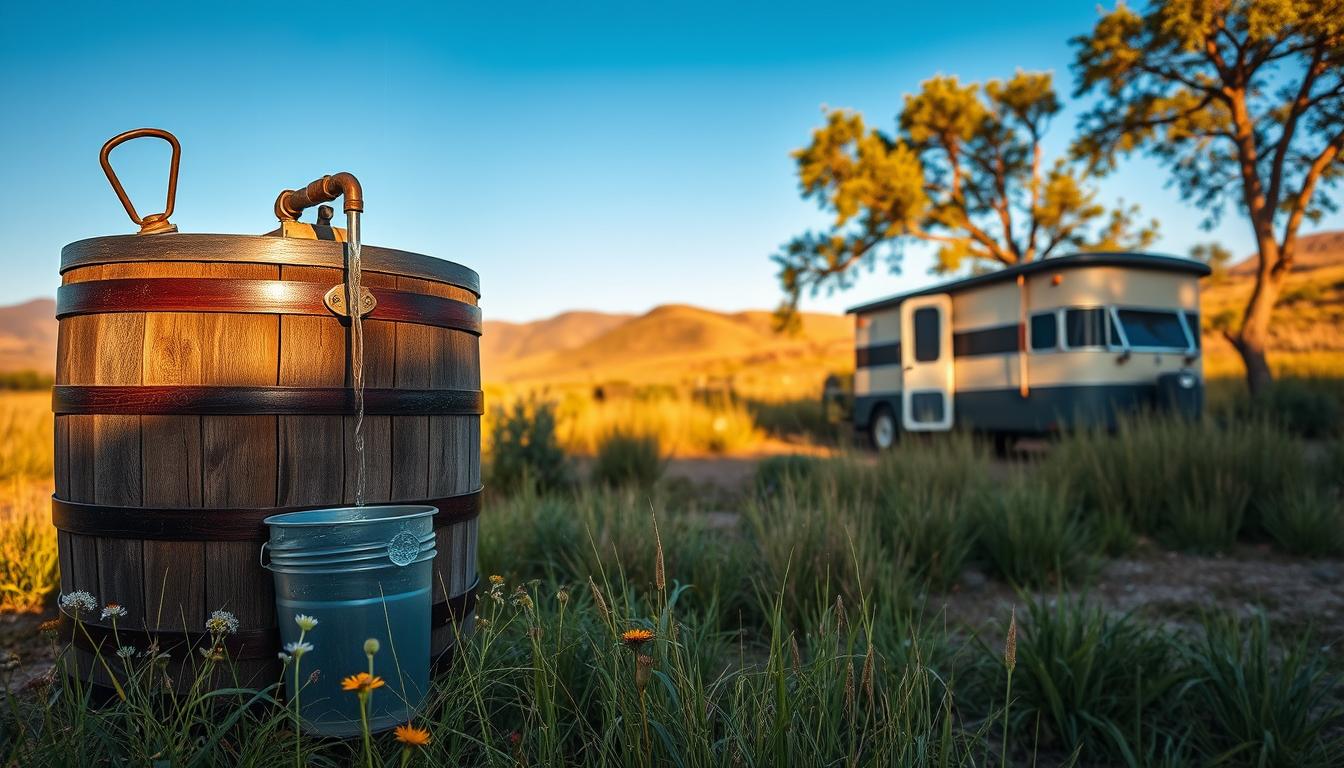
For storing a lot of water, large, food-grade plastic barrels are best. For everyday use, smaller 5- to 7-gallon containers with spigots are handy. Learn more about water storage for off-grid caravans.
Collapsible Water Storage Options
Collapsible water storage is flexible and saves space. It’s perfect for mobile living.
Water Bladders and Bags
Water bladders and bags are light and compact. They’re great for adventures on the go.
Space-Saving Design Benefits
They fold up for easy storage. This saves room in your vehicle.
Fixed Tank Systems for Vehicles
Fixed tank systems are good for those with specific vehicles. They offer a stable water storage option.
RV and Van Water Tank Systems
RV and van water tank systems fit right into the vehicle. They provide a smooth water storage solution.
Installation and Maintenance Tips
It’s important to install and maintain fixed tank systems well. This keeps them working long-term.
Water Storage and Usage for Mobile Off Grid Living: Best Practices
To have a steady water supply, it’s key to follow the best ways to store and use water. This means keeping water clean, handling changes in seasons, and checking water quality.
Preventing Contamination in Storage
Keeping water clean is very important. This is done by regularly cleaning and sanitizing containers.
Cleaning and Sanitizing Containers
Containers need to be cleaned and sanitized often. This removes dirt and kills harmful germs.
Rotation and Freshness Strategies
It’s good to change the water every 6-12 months. This keeps the water fresh and safe to drink.
Seasonal Considerations
Seasons can change how we store water. We must protect it from very hot or cold temperatures.
Winter Protection Against Freezing
In winter, we must keep water from freezing. Insulated containers or a safe place can help.
Summer Heat Management
In summer, we need to keep water cool. This stops algae and keeps it clean.

Monitoring Water Quality
It’s important to check water quality often. We should test for contaminants and watch for signs of bad water.
Testing Methods for Mobile Living
There are portable kits for testing water. These kits check for harmful stuff like bacteria and chemicals.
Signs of Water Contamination
Bad smells, colors, or tastes mean the water might be contaminated. If you see these signs, test the water right away.
| Best Practice | Description | Benefit |
|---|---|---|
| Regular Cleaning and Sanitizing | Cleaning and sanitizing containers regularly | Prevents contamination |
| Rotation of Water Supply | Rotating water supply every 6-12 months | Maintains water freshness |
| Seasonal Protection | Protecting water from extreme temperatures | Ensures water remains usable |
Water Collection Methods for Off-Grid Mobility
Living off-grid means finding ways to collect water on the move. Two main ways are rainwater harvesting and finding natural water sources.
Rainwater Harvesting on the Go
Rainwater harvesting is a great way to get water, where it rains a lot. It uses gutters and tanks to catch and save rainwater for later.
Simple Collection Systems for Vehicles
It’s possible to put simple water collection systems on cars. They use gutters or other parts to catch rainwater. These systems are perfect for those who move around a lot, giving them a steady water supply.
Filtration of Collected Rainwater
It’s very important to make collected rainwater safe to drink. There are many ways to do this, like using filters, sedimentation, or UV treatment.
Finding Natural Water Sources Safely
Finding natural water spots is also key for off-grid water collection. This means looking for streams, rivers, or ponds and checking if they’re safe to drink from.
Identifying Reliable Water Sources
Good water sources often have lots of green plants or look like they’ve had water recently. Always check the water quality before drinking it.
Apps and Resources for Water Location
There are apps and resources that help find natural water spots. They show maps and info on where to find water, helping you find safe drinking water.
Water Conservation Techniques for Limited Supplies
For those living off-grid, saving water is a must. It’s not just a habit, but a way to survive. In mobile off-grid settings, water is scarce, so saving it is key.

Greywater Reuse Systems for Mobile Living
Greywater reuse systems are a smart choice for saving water on the move. They use water from sinks, showers, and washing machines. This way, you use less water overall.
Simple DIY Greywater Solutions
Setting up a greywater reuse system is easy. You can redirect greywater to your garden or other places where it’s not for drinking.
Safe Uses for Recycled Water
Greywater is good for watering plants, flushing toilets, and more. But, it must be treated right to keep you healthy.
Water-Efficient Appliances and Fixtures
Using appliances and fixtures that save water is smart. They use less water but work just as well.
Low-Flow Adaptations for Mobile Living
Low-flow showerheads, faucets, and toilets save a lot of water. They’re great for mobile living because they help you use less water when you have less space to store it.
Navy Showers and Conservation Habits
Doing “navy showers” helps save water too. It means turning off the water while you soap up. Making saving water a habit is important for off-grid living.
Emergency Water Planning
Planning for water emergencies is vital in off-grid living. You need a plan for saving and managing water during droughts or when water is hard to get.
Backup Water Sources
Finding backup water sources is smart. This could be natural springs or extra tanks. They help in emergencies.
Water Rationing Strategies
Water rationing helps in emergencies. It means using less water, like shorter showers or no water for non-essential things.
Water Purification and Treatment Options
Keeping drinking water safe is key for off-grid living fans. There are many ways to purify and treat water, each with its own benefits.
Portable Filtration Systems
Portable filters are loved for off-grid living. They remove many bad things from water, like germs and dirt.
Gravity Filters vs. Pump Filters
Gravity filters are simple to use and need little effort. Pump filters give more control and can work better in some cases.
Micron Ratings and What They Filter
The micron rating shows how well a filter works. A lower number means it catches smaller stuff, like tiny germs.
Chemical Treatment Methods
Chemicals like chlorine kill germs in water. But, they must be used carefully to avoid harm.
Chlorine and Iodine Options
Chlorine and iodine are good for killing germs. But, they can make water taste bad if not used right.
Proper Dosing Guidelines
Using the right amount of chemicals is very important. Too little won’t clean the water, and too much can be dangerous.
UV and Solar Purification
UV and solar methods are other ways to clean water. They use light to kill germs without chemicals.
SteriPEN and UV Technology
SteriPEN uses UV light to purify water fast and easy. It’s great for treating water on the move.
SODIS Method for Emergency Use
The SODIS method uses sunlight to clean water in clear bottles. It’s simple and cheap, perfect for emergencies.
When picking a water cleaning method, think about how well it works, how easy it is to use, and the cost. Here’s a table comparing the methods we talked about:
| Method | Effectiveness | Ease of Use | Cost |
|---|---|---|---|
| Portable Filtration Systems | High | Easy | Moderate to High |
| Chemical Treatment Methods | High | Moderate | Low to Moderate |
| UV and Solar Purification | High | Easy to Moderate | Low to High |
Conclusion
To have water security when living on the move, you need a good plan for storing, using, and purifying water. Using the right off grid water management solutions helps save water. This way, you don’t have to rely so much on city water.
Being water-efficient is key for living off the grid. You can use greywater systems, like those from Aqua2use, to cut down on water use. For more on greywater systems, check out the Water Wise Group website.
By choosing green practices and using smart off grid water solutions, you can have water security. This way, you can keep a steady water supply, even in far-off places.
FAQ
What are the daily water requirements for off-grid living?
You need at least one gallon of water per person each day. This is for drinking, cooking, and staying clean.
How can I store water effectively for mobile off-grid living?
Use portable water containers or collapsible storage. Make sure they’re made for off-grid use and can handle different weather.
What are the best practices for preventing contamination in water storage?
Check and clean your storage often. Use tight seals and covers. Follow a first-in, first-out rule to avoid bad water.
How can I harvest rainwater while on the move?
Get a portable rainwater kit or attach a system to your vehicle. This way, you can collect and store rainwater.
What are some effective water conservation techniques for limited supplies?
Use greywater systems and water-saving appliances. Plan for when you might need extra water. This helps use less and manage what you have.
What water purification methods are suitable for off-grid living?
Portable filters, chemical treatments, or UV/solar systems work well. Pick what fits your needs and water source.
How can I ensure water security for my mobile off-grid lifestyle?
Manage water with storage, collection, saving, and purification. Learn about sustainable water use too.
What are some seasonal considerations for water storage and usage?
Get ready for changes in water availability with the seasons. Adjust how you store and use water based on weather and demand.
How can I monitor water quality effectively?
Test your water often for bad stuff. Use quality monitoring tools. Watch for signs of sickness to keep your water safe.

Subscribe to Our Newsletter