Rainwater harvesting is a great way to save water. It collects and stores rainwater for later use. This method helps save water and lowers the need for city water.
Thank you for reading this post, don't forget to subscribe!Traditionally, people collect rainwater from roofs and store it in tanks. For more info on rainwater harvesting systems, check out these resources. They offer lots of details and benefits.
Key Takeaways
- Rainwater harvesting is a viable method for conserving water.
- It involves collecting and storing rainwater for future use.
- This practice reduces the demand on municipal water supplies.
- Rainwater harvesting systems can be implemented in various settings.
- Proper implementation can lead to significant water conservation.
The Fundamentals of Water Conservation
Water conservation is key to living sustainably. It’s vital to understand the importance of being water self-sufficient.
The Growing Importance of Water Self-Sufficiency
Water self-sufficiency means using less municipal water. We do this by using rainwater harvesting and other methods. It saves water and is a green way to manage water.
Environmental and Economic Benefits
Rainwater collection has many benefits. It’s good for the environment and saves money. It helps us use less water and supports a greener future.
Reduced Water Bills
One big money saver is lower water bills. Using rainwater for things like toilet flushing and garden watering cuts down on municipal water use.
Decreased Strain on Municipal Systems
Harvesting rainwater also eases the load on city water systems. This means less energy needed to treat and move water. It helps make cities more sustainable.
Learn more about rainwater harvesting and its perks at WaterCache’s Rainwater Harvesting 101.
| Benefits | Description | Impact |
|---|---|---|
| Reduced Water Bills | Lower consumption of municipal water | Economic Savings |
| Decreased Strain on Municipal Systems | Reduced demand on municipal water supplies | Sustainable Urban Infrastructure |
| Environmental Benefits | Reduced runoff and groundwater recharge | Ecological Balance |
Water Collection and Storage Systems Explained
Water collection and storage systems work well when they have the right parts. They catch, store, and spread out rainwater. This makes them key for saving water.
How Modern Collection Systems Work
Modern systems catch rainwater from places like rooftops and put it in tanks. They use many parts that work well together.
Components of an Effective System
A good system has a few important parts. These are:
Collection Surfaces
The first step is catching rainwater. Roofs are often used because they are big and already there. What the roof is made of matters for the water’s quality.
Conveyance Methods
Methods like gutters and downspouts move water to the tank. They should keep out dirt and bad stuff.

Tanks hold the rainwater until it’s used. The size and what they’re made of depend on how much water you need and where you have space.
Distribution Systems
The system that gets the water to where it’s needed is also key. It can use gravity or pumps, depending on the setup.
Calculating Your Water Collection Potentia
To figure out how much water you can collect, look at your area’s rainfall and how big your roof is. A simple formula can help: Collection = Rainfall (in inches) x Roof Size (in square feet) x 0.623. This gives you a starting point for your system.
Knowing how each part works is key to making a good water collection system. By making each part better, you can collect more rainwater.
Types of Rainwater Harvesting Systems
Rainwater harvesting systems vary from simple to complex. They collect and store rainwater for different uses. This reduces the need for groundwater and city water.
Passive Rainwater Collection Methods
Passive methods collect rainwater without machines. They are simple, cheap, and good for the environment.
Rain Gardens and Swales
Rain gardens and swales are ground depressions that catch and filter rainwater. They help recharge groundwater and support wildlife.
Permeable Surfaces
Permeable surfaces, like pavers and asphalt, let rainwater soak through. This cuts down on runoff and cleans the water.
Active Rainwater Harvesting Systems
Active systems use machines to collect, store, and use rainwater. They are more complex and expensive but reliable for many uses.
Rooftop Collection Systems
Rooftop systems collect rainwater from roofs and store it in tanks. This water is good for irrigation, toilet flushing, and more.
Surface Runoff Collection
Surface runoff systems catch rainwater that flows off land. This water is stored in ponds or tanks for various uses.
Greywater Recycling Options
Greywater recycling treats and reuses water from sinks, showers, and washing machines. It’s used for irrigation and toilet flushing, saving potable water.
Key Considerations
- System design and complexity
- Water quality and treatment needs
- Storage capacity and tank size
- Intended use of harvested water
Water Storage Solutions for Homes and Businesses
Choosing the right water storage solution is key for homes and businesses. It depends on the water’s use and space available.
Residential Storage Options
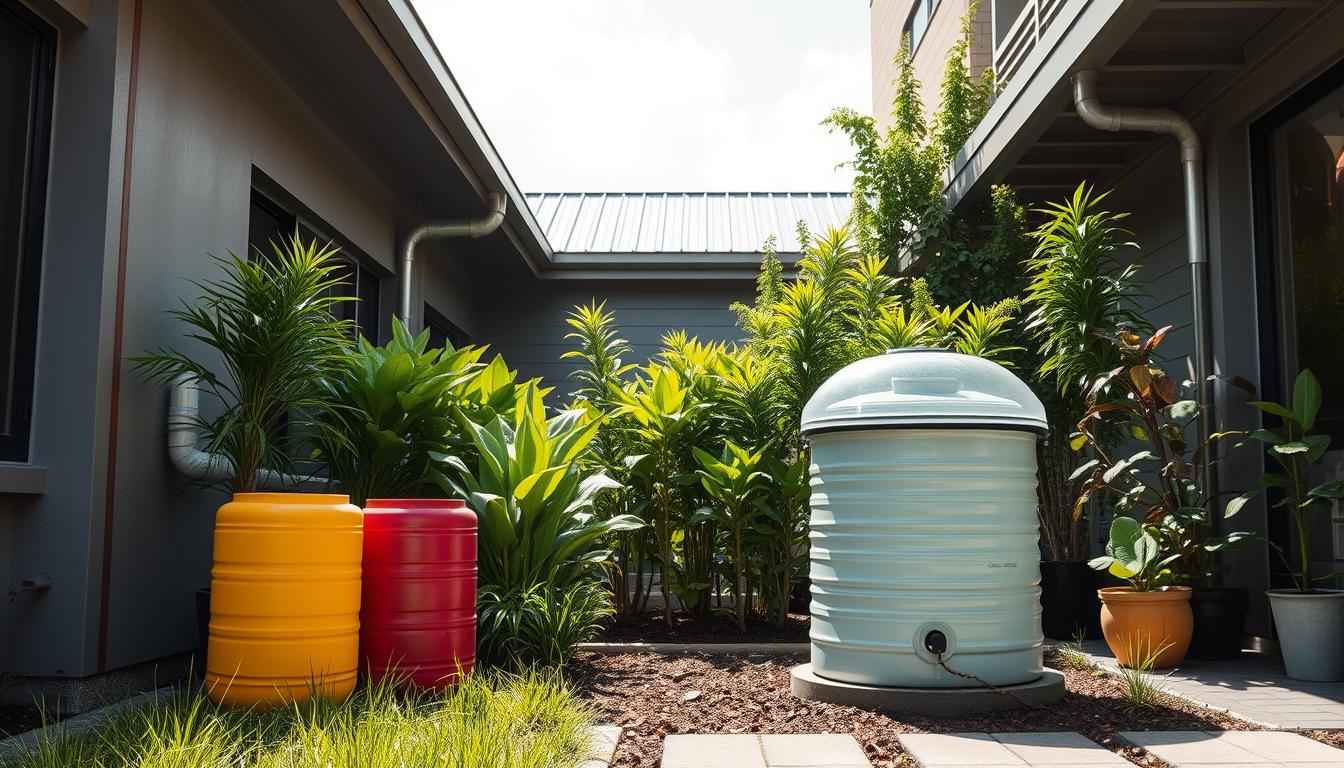
There are many water storage solutions for homes. They meet different needs and fit various spaces.
Rain Barrels (50-100 Gallons)
Rain barrels are easy and cheap to use. They’re great for small gardens. They’re affordable and easy to install.
Above-Ground Tanks (200-10,000 Gallons)
Above-ground tanks hold more water. They’re good for bigger gardens or homes. They’re durable and look nice.
Underground Cisterns (1,000+ Gallons)
Underground cisterns are a lasting choice. They start at 1,000 gallons. They save space and hold a lot of water.

Commercial Storage Systems
Businesses need bigger and more complex storage.
Large-Scale Tanks and Reservoirs
Large tanks and reservoirs are for big businesses. They hold lots of water. They’re scalable and reliable.
Industrial Water Recycling Infrastructure
Industries with high water needs use advanced recycling systems. This saves water and cuts down on waste. It’s efficient and green.
Choosing the Right Size and Material
When picking a storage solution, think about size and material. Size depends on water needs and rainfall. Material should last long and not rust. Consider upkeep, cost, and how it affects the environment.
Setting Up Your Own Water Collection System
Creating a rainwater harvesting system needs careful planning and installation. This guide will help you set up an efficient and sustainable system.
Planning and Design Considerations
Start by assessing your site and planning your budget. Site assessment looks at rainfall, roof size, and drainage. For more info, check WaterCache’s Rainwater Harvesting 101 guide.
Site Assessment
- Evaluate the roof catchment area to determine possible water collection.
- Look at local rainfall patterns to know water availability.
- Check your drainage systems for compatibility.
Budget Planning
Setting a realistic budget is key. Think about material, tool, and labor costs. Rainwater harvesting systems vary in cost based on size and complexity.
Required Materials and Tools
You’ll need specific materials and tools for installation. These include:
- Storage tanks
- Gutters and downspouts
- Filtration systems
- Pumps and plumbing materials
Step-by-Step Installation Guide
- Clear the area for the storage tank.
- Install gutters and downspouts to direct water into the tank.
- Connect the tank to your filtration system for clean water.
- Use an installation guide to link the system to your plumbing.
Connecting to Existing Plumbing
To use your rainwater, connect it to your plumbing. This means:
Filtration Requirements
It’s important to filter your rainwater well. Filtration requirements depend on how you plan to use the water.
Pump Systems
A pump system is needed to move the water around your property. Pick a pump that fits your system’s size and pressure needs.
By following these steps and considering important factors, you can set up a rainwater harvesting system. You’ll learn how to store rainwater for different uses.
Maintenance and Legal Considerations
Keeping your rainwater harvesting system working well needs regular care and knowing the law. Good upkeep makes your system last longer and keeps the water safe to use.
Regular System Maintenance
Keeping your system in top shape is key. This means doing seasonal cleaning procedures and stopping contamination.
Seasonal Cleaning Procedures
Here are steps to keep your system clean:
- Check gutters and downspouts for blockages
- Clean the storage tank and look for sediment
- Make sure all connections and valves are tight and working
Preventing Contamination
It’s important to keep the water clean. You can do this by:
- Putting in screens to block debris and animals
- Keeping the roof catchment area clean and free of harmful stuff
- Checking the system often for signs of contamination
Water Quality Management
Managing water quality means testing it often and using the right treatments.
Testing Methods
Testing the water regularly is key to making sure it’s safe. You can use:
| Test Type | Description | Frequency |
|---|---|---|
| pH Level | Checks if the water is too acidic or alkaline | Quarterly |
| Bacterial Contamination | Looks for harmful bacteria like E. coli | Bi-Annually |
| Turbidity | Checks how clear the water is | Annually |
Treatment Options
If the tests show problems, you might need to use filters, UV treatment, or chemicals. For more help, check out the Cistern Accompanying Document.
U.S. Regulations and Permits
Knowing U.S. laws and getting the right permits is vital for your system to work legally.
State-by-State Legal Overview
Rules change a lot by state. Always check with local officials for what you need. Some places are more welcoming to rainwater harvesting than others.
Tax Incentives and Rebates
Many places offer tax breaks and rebates for rainwater systems. These can help lower the cost of starting up.
[link-whisper-related-posts]Conclusion: Sustainable Water Management for the Future
Rainwater harvesting is key to sustainable water management. It helps us save water. By learning about Water Collection and Storage Systems Explained, we can help our planet.
Using water conservation methods is important. Rainwater harvesting systems cut down on the need for city water. They also lessen stormwater runoff. This is a big step towards a water-efficient world.
By using these systems, we help make a better future. Sustainable water management is very important. Adopting water conservation methods is a big step towards a greener tomorrow.
FAQ
What is rainwater harvesting, and how does it work?
Rainwater harvesting collects and stores rainwater for later use. It directs rainwater from rooftops into a storage system. This stored water can be used for irrigation, toilet flushing, or even drinking.
What are the benefits of installing a rainwater harvesting system?
A rainwater harvesting system can lower your water bills. It also helps reduce the demand on municipal water supplies. Plus, it’s a reliable water source during droughts or water shortages.
What types of water storage solutions are available for homes and businesses?
Homes and businesses can choose from rain barrels, above-ground tanks, and underground tanks. The right choice depends on space, budget, and how you plan to use the water.
How do I choose the right size and material for my water storage tank?
Consider your area’s rainfall, the water’s intended use, and available space when picking a tank. Common materials include steel, concrete, and plastic.
What are the different types of rainwater harvesting systems, and which one is best for me?
Rainwater harvesting systems come in passive and active types. Passive systems collect water naturally, while active systems use pumps and pipes. The best system for you depends on your needs and situation.
How do I maintain my rainwater harvesting system to ensure its longevity?
Keeping your system in good shape is key. Clean the collection surface, check for damage, and test for contamination regularly.
Are there any regulations or permits required for installing a rainwater harvesting system?
Yes, local rules and permits might be needed for your system. Always check with local authorities to know what’s required.
Can I use rainwater for drinking, and if so, what treatment is required?
You can drink rainwater if it’s treated and tested right. Treatment might include filtration or disinfection, depending on the water quality.
Are there any tax incentives or rebates available for installing a rainwater harvesting system?
Yes, tax breaks or rebates might be available. Check with local authorities or water conservation groups to see what’s out there.

Subscribe to Our Newsletter