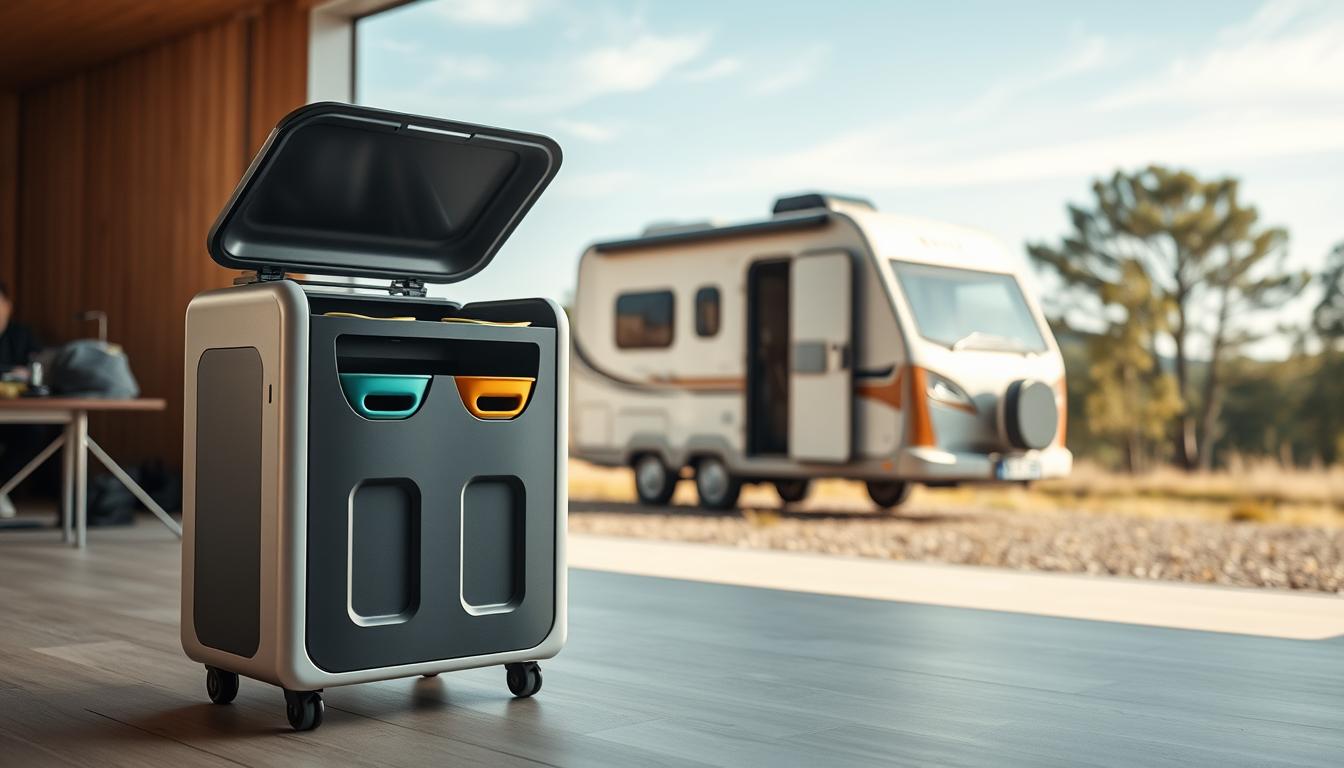
For those living on the move, managing waste effectively is key. Traditional toilets aren’t always there. So, portable waste management is a must.
Thank you for reading this post, don't forget to subscribe!Off-grid toilets are a great solution. They don’t need public utilities. Plus, some designs turn waste into clean energy. This is good for the planet and keeps things clean.
This move to eco-friendly toilets is changing how we handle waste on the go. It gives us a cleaner, greener way to live.
Key Takeaways
- Eco-friendly toilets are a vital component of mobile living.
- Off-grid toilets provide a reliable sanitation solution.
- Portable waste management is key for sustainable living.
- Innovative toilet designs can turn waste into clean energy.
- Sustainable waste management keeps things clean and helps the planet.
Understanding Waste Management Challenges in Mobile Living
Living in an RV, van, or boat has its own waste management issues. These spaces are small, making it hard to handle waste.
Space Constraints and Storage Limitations
Space for storing waste is very limited. This is why compact toilets are key. They help manage waste without taking up too much room.
Key considerations for compact toilet options include:
- Size and weight
- Water consumption
- Waste storage capacity
Environmental Considerations
People living on the move want to be kind to the planet. Eco-friendly sanitation solutions are important. They help lessen the harm caused by waste.
| Environmental Impact | Traditional Toilets | Eco-Friendly Toilets |
|---|---|---|
| Water Consumption | High | Low |
| Waste Production | High | Low |
| Energy Usage | High | Low |
Regulatory Compliance Across Different Locations
Traveling means dealing with different rules for waste disposal. It’s important to follow these rules. This way, you avoid fines and stay green.
Types of Waste and Toilet Solutions for Mobile Living
Mobile living is free but managing waste is a big challenge. There are many toilet solutions, each with its own benefits.
Cassette Toilets
Cassette toilets are great for mobile living. They are easy to use and don’t need much upkeep.
Operation and Capacity
These toilets store waste in a cassette that you can empty at dump stations. They can hold 10 to 20 liters of waste.
Pros and Cons
They are easy to use and not very expensive. But, they need to be emptied often and can smell if not kept clean.

Composting Toilets
Composting toilets are eco-friendly. They turn waste into compost.
How Composting Works
These toilets break down waste naturally, with help from microorganisms. The end result is compost that’s safe to use or dispose of.
Maintenance Requirements
Keeping them clean is important. You need to add carbon-rich materials and make sure the compost is well-aerated.
Portable Chemical Toilets
Portable chemical toilets are simple and work well.
Chemical Types and Environmental Impact
The chemicals used can affect the environment. Choose eco-friendly options when you can.
Usage Limitations
These toilets are handy but have limits. They need regular chemical refills and can harm the environment if not disposed of right.
Incinerating Toilets
Incinerating toilets burn waste with electricity. They leave very little ash behind.
Power Requirements
These toilets need a lot of power. They’re best for certain mobile living setups.
Safety Considerations
They are safe because they use high temperatures and electrical parts.
| Toilet Type | Capacity | Maintenance Needs | Environmental Impact |
|---|---|---|---|
| Cassette Toilets | 10-20 liters | Regular emptying | Moderate |
| Composting Toilets | Varies | Regular maintenance | Low |
| Portable Chemical Toilets | Varies | Chemical replenishment | High |
| Incinerating Toilets | Varies | Low, aside from power | Low, if using renewable energy |
Portable Toilet Systems for Different Mobile Lifestyles
Different lifestyles need different portable toilet systems. This includes RVs, sailboats, and more. Each lifestyle has its own needs and challenges.
Solutions for RVs and Motorhomes
RVs and motorhomes need good toilet systems. Efficient black and gray water systems keep things clean and reduce dumping.
Black and Gray Water Systems
Black water systems handle sewage. Gray water systems deal with wastewater from sinks and kitchens. Both are key for a comfy RV trip.
Dump Station Protocols
RV owners must know dump station rules. This includes where to find them, how to dump, and toilet system care.
Van Life Toilet Options
Van dwellers need small, quiet toilets. Space-saving designs are a must in vans where space is tight.
Space-Saving Designs
Van toilets are small and easy to use. They must be simple to clean and store too.
Stealth Considerations
Van dwellers want toilets that are quiet and don’t smell. They should also be easy to hide.
Boat and Marine Sanitation Systems
Boat owners must follow Coast Guard rules on waste. Marine sanitation systems help protect the environment.
Coast Guard Regulations
The Coast Guard has rules for boat waste. Owners must follow these to avoid fines and protect the sea.
Saltwater Considerations
Saltwater can damage toilets. So, boat toilets must be made to resist corrosion.
Off-Grid Toilet Solutions and Technology
Off-grid toilet solutions have changed mobile living. They offer efficient and green waste management. These systems meet the need for eco-friendly and self-sufficient homes.
Solar-Powered Options
Solar-powered toilets are great for off-grid living. They use renewable energy to cut down on harm to the environment. Energy efficiency is a big plus, as they don’t need much power.
Energy Requirements
The energy needs of solar-powered toilets depend on the system and how much it’s used. Usually, they need very little energy. This makes them perfect for off-grid use.
Installation Considerations
When setting up solar-powered toilets, think about sunlight and battery size. This ensures they work well.
Self-Contained Systems
Self-contained toilet systems are small and efficient. They’re great for mobile living. For more info, check out this guide on off-grid toilets.
Capacity Limitations
Self-contained systems have limits on how much waste they can hold. Knowing this helps avoid overflow.
Odor Control Technology
Modern self-contained toilets have advanced odor control. This makes using them a pleasant experience.
Innovative Portable Toilet Technology
New portable toilet tech includes smart features and monitoring. These improve convenience and performance.
Smart Features and Monitoring
Smart toilets track waste levels and send alerts. They make using the toilet better.
Future Developments
Technology will keep getting better. We’ll see even more efficient and green off-grid toilet solutions.

Emptying and Disposal Best Practices
Using portable toilets needs good emptying and disposal habits. This keeps your living space clean and eco-friendly. It’s key for staying healthy and protecting the environment.
Finding Dump Stations and Disposal Sites
Finding the right places to dump waste is very important. If you’re in an RV or campervan, looking for dump stations is a must. Many places like campsites and RV parks have them. You can also use apps to find them.
Proper Cleaning and Sanitation
After dumping, cleaning the toilet right is very important. It stops bacteria and bad smells from spreading. Use special cleaners and follow the directions to clean and disinfect well.
Eco-Friendly Disposal Methods
There are green ways to dispose of waste that are getting more popular. Two good ones are:
Composting Waste
Composting toilets or turning waste into compost is good for the planet. It breaks down waste into compost that’s safe to use or throw away.
Biodegradable Solutions
Using biodegradable chemicals or bags in portable toilets is also eco-friendly. These products naturally break down, making waste disposal less harmful to the environment.
Following these tips makes living on the move cleaner and greener.
Cost Analysis and Budget Considerations
Looking at the money side of different toilet options is key. In mobile living, toilet costs can range from cheap to pricey with extra features.
Initial Investment vs. Long-term Costs
The first cost of a toilet is just the start. Long-term costs like upkeep, emptying, and fixes can add up a lot. For example, a cassette toilet might be cheaper at first. But, it could cost more over time because it needs to be emptied and fixed often.
Budget-Friendly Options
If you’re watching your wallet, there are cheap toilet choices. Portable chemical toilets start at about $100. They’re easy to use and can be a good short-term fix.
Premium Solutions and Their Benefits
Premium toilets like incinerating or advanced composting ones have big pluses. They’re better for the planet and make life easier. Even though they cost more upfront, they save money and improve your experience in the long run.
When picking a toilet, think about the first cost and the future expenses. Also, consider how eco-friendly options can help.
[link-whisper-related-posts]Conclusion: Choosing the Right Waste Solution for Your Mobile Lifestyle
Finding the perfect waste management solution is key for a happy and green mobile life. Knowing about different waste types and toilet options helps make smart choices. These choices should fit your lifestyle, budget, and what you like.
Things like space, caring for the planet, and following rules are important. They help pick the best toilet for you. You might choose a cassette toilet for RVs, a composting toilet for living off-grid, or a portable chemical toilet for short stays.
Think about the cost upfront, ongoing expenses, and upkeep needs when picking a waste solution. Understanding these helps find a toilet that suits your needs. This way, your mobile living gets better.
The right waste solution really changes life for those living on the move. Making a smart choice leads to a greener, easier, and more fun life on the go.
FAQ
What are the most eco-friendly toilet solutions for mobile living?
For mobile living, eco-friendly toilets include composting toilets. Nature’s Head is a good example. They turn waste into compost. Self-contained systems also save water and reduce waste.
How do I choose the right portable toilet for my RV or van?
Think about space, waste capacity, and cleaning ease when picking a portable toilet. Cassette toilets and chemical toilets are great for their small size and ease of use.
What are the regulations for boat sanitation systems?
Boat toilets must follow Coast Guard rules. These rules depend on the boat’s size and use. Marine sanitation devices (MSDs) treat and store waste onboard.
How do I dispose of waste from a portable toilet?
Dispose of portable toilet waste at designated dump stations. Always clean and sanitize properly to avoid disease and bad smells.
What are the benefits of solar-powered toilet solutions?
Solar toilets use the sun for incinerating or composting. They’re efficient and green. They’re perfect for places without regular power.
How much do portable toilet solutions cost?
Portable toilet prices vary. You can find cheap chemical toilets or spend more on composting ones. Think about the upfront cost and ongoing expenses like maintenance and disposal.
Can I use a composting toilet in cold climates?
Yes, composting toilets work in cold weather. They need extra insulation and care. Some models are made for colder places.
What are the advantages of self-contained toilet systems?
Self-contained toilets use less water and produce less waste. They also control odors better. They’re great for small spaces and eco-friendly living.

Subscribe to Our Newsletter