Winter camping in a van is peaceful and refreshing. But, it needs careful planning to stay cozy. As it gets colder, keeping warm is key for van dwellers. The big challenge is finding good vanlife heating solutions that don’t need shore power.
Thank you for reading this post, don't forget to subscribe!For those living the vanlife, staying warm without shore power is vital for comfort and safety. This article will look at ways to keep warm in a van during winter.
Key Takeaways
- Improve insulation in your campervan
- Choose the right heat source for off-grid warmth
- Manage condensation and moisture effectively
- Upgrade your bedding for colder nights
- Dress in layers for van life winters
The Challenges of Cold Weather Van Living
The cold weather is tough for van dwellers. They face heat loss and safety issues. Keeping a cozy living space in winter is hard.
Understanding Heat Loss in Vans
Heat loss in vans happens because of bad insulation. Cold air gets in, and warm air goes out. Using insulation materials like foam board or Reflectix helps. For tips on winter van living, see this article.
The Impact of Weather Conditions
Weather greatly affects van living. Extreme cold and freezing temperatures are big challenges. Van dwellers must adjust to stay warm.
Health and Safety Concerns
Cold weather van living has health and safety risks. Hypothermia and carbon monoxide poisoning are dangers. It’s important to use proper ventilation and keep heating systems in check.
Comprehensive Insulation Strategies
To fight the cold, van dwellers need good insulation. It keeps the van warm by trapping heat inside. Many new van campers find out how fast a van loses heat through thin walls. Effective insulation is essential for a cozy, warm space.
Window Insulation Solutions
Windows let a lot of heat out. Van dwellers can use thermal window covers or magnetic insulation to stop this. For example, insulating windows makes the van warmer.
Wall and Ceiling Insulation Materials
For walls and ceilings, foam board, Reflectix, or spray foam work well. They cut down on heat loss and keep the van warm. Pick the right material for your van and climate.
Floor Insulation Techniques
Floor insulation is also key. You can use foam board under the floor or a thermal mat. These methods block cold from the ground, keeping the van warm.
Sealing Drafts and Air Leaks
Sealing drafts and air leaks is vital. Use weatherstripping and caulk or spray foam to seal gaps. This reduces heat loss a lot.
Managing Condensation and Moisture

It’s important to manage moisture to avoid mold and mildew. Good ventilation and moisture-resistant materials help. Check for moisture often to keep your van healthy and warm.
Staying Warm in Vans Without Shore Power: Heating Options
Heating a van without shore power needs careful thought. Van dwellers have many heating options. Each has its own benefits and things to consider.
Propane Heaters: Types, Efficiency, and Safety
Propane heaters are popular for vans. They are efficient and not too expensive. There are different types, like:
- Vent-free propane heaters, which are small and efficient but need good air flow to avoid moisture.
- Vent-free models with oxygen depletion sensors (ODS) for safety.
It’s important to have good air flow and follow safety rules to avoid carbon monoxide poisoning.
Diesel Heaters: Installation, Cost, and Performance
Diesel heaters are very efficient. They can work with a van’s fuel system. They offer:
- They heat well, great for big vans or cold places.
- They can use the van’s diesel tank.
But, they are hard to install and might need a pro. They cost more at first, but save money in the long run.
Portable Butane Heaters
Portable butane heaters are good for vans. They are:
- Small and easy to carry.
- Simple to use, with some having adjustable heat.
But, they might not heat big spaces or very cold places well. It’s important to have safety features like automatic shut-off.
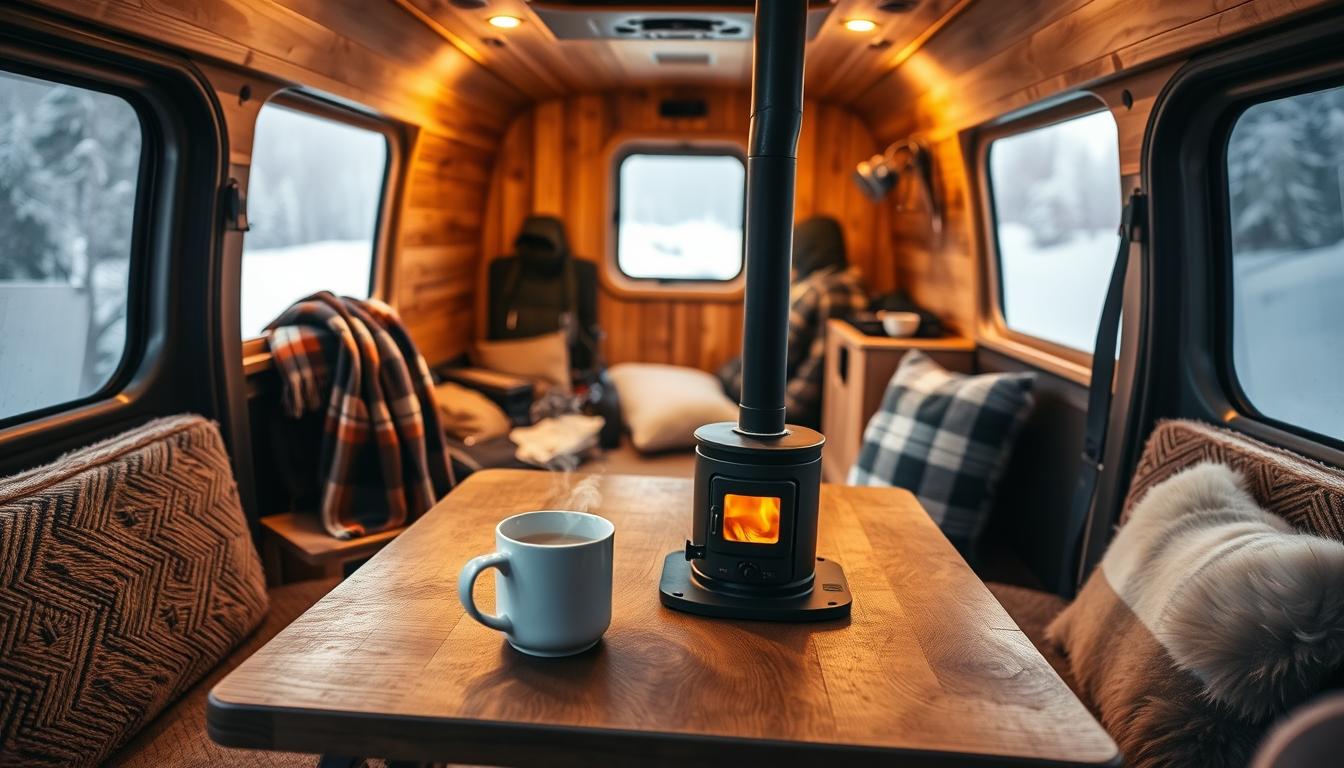
Wood Stoves for Vans: Installation Considerations
Wood stoves can warm vans a lot. Important things to think about are:
- Installing them right for safety and to work well, including venting and keeping them away from flammable things.
- Having enough firewood and space to store it.
Getting them installed right needs careful planning and might need a pro to meet safety rules.
Battery-Powered Heating Solutions
Battery-powered heaters, like electric ones or heated mats, are good for vans with limited power. They are:
- Safe and easy to put in.
- Depend on the van’s electrical system and battery.
They work best for mild cold or as extra heat.
Alternative Warming Methods and Winter Vanlife Hacks
Winter van life is more than just a heater. As it gets colder, you need many ways to stay warm. This includes using different warming methods and hacks for vanlife.

Thermal Clothing Layers and Materials
Clothing is key in van life. Layering helps you adjust to the day. Begin with moisture-wicking layers, then add insulating ones like wool sweaters. Finish with a soft shell jacket to block wind.
For more ideas, check out campervan heating options.
Winter-Ready Bedding Systems
A good bedding system is vital for cold nights. Use thermal sleeping bags or electric blankets for vanlife. Hot water bottles or heated mattress pads also keep your bed warm.
These keep your body heat up at night, ensuring a good sleep.
Hot Water Bottles and Hand Warmers
Hot water bottles and hand warmers are simple but effective. Fill a hot water bottle with warm water for your feet at night. Hand warmers in gloves or pockets keep your hands warm.
These are great DIY van heating ideas that are easy to use.
Strategic Parking for Temperature Management
Where you park your van affects its temperature. Choose spots that block harsh winds or get sunlight. Parking on a south-facing slope or near a natural windbreak helps keep it warmer.
Body Heat Conservation Techniques
Keeping body heat in is as important as making it. Wear a hat and gloves to bed. Use a sleeping bag liner to stay warm. Also, use thermal insulation in your van to prevent heat loss.
[link-whisper-related-posts]Conclusion: Thriving in Winter Van Life
Living in a van during winter needs good planning, smart insulation, and warm heating. Knowing how to handle cold weather and insulating well keeps your space cozy.
Portable heaters are a great way to stay warm in your van. You can choose from propane, diesel, or battery heaters. Having a good heat source is key for a warm winter van life.
Adding extra warmth with clothes and smart parking helps too. With the right gear and planning, winter van trips can be fun and comfy. This lets you enjoy winter camping and adventures more.
FAQ
What are the best insulation materials for van living?
Reflectix, foam board, and spray foam are top picks for van insulation. They help keep your van warm by reducing heat loss. Use them on walls, ceilings, and floors.
How can I stay warm in my van without shore power?
Stay warm without shore power with propane, diesel, or butane heaters. Wood stoves work too. Wear thermal clothes and use hot water bottles for extra warmth.
What are the safety considerations for using heaters in a van?
Heaters need proper ventilation and carbon monoxide checks. Follow the maker’s guide to avoid fires. Safety first!
How can I manage condensation and moisture in my van?
Use ventilation, insulation, and dry materials to fight moisture. Check for damp spots often. Fix them fast to keep your van dry.
What are some winter vanlife hacks for staying warm?
Use thermal curtains and park in sunny spots to stay warm. Wear warm clothes and use hot water bottles. Portable heaters and cozy bedding help too.
Can I use a wood stove in my van?
Yes, but it needs careful setup and upkeep. Always follow the maker’s guide and safety tips to avoid accidents.
How can I improve the energy efficiency of my van?
Insulate well, seal air leaks, and optimize your heating. Choose energy-saving appliances and lights to cut down on energy use.
What are the benefits of using a diesel heater in my van?
Diesel heaters are efficient and reliable. They heat both the engine and living space. They’re safe and can be set with a thermostat for the perfect temperature.

Subscribe to Our Newsletter