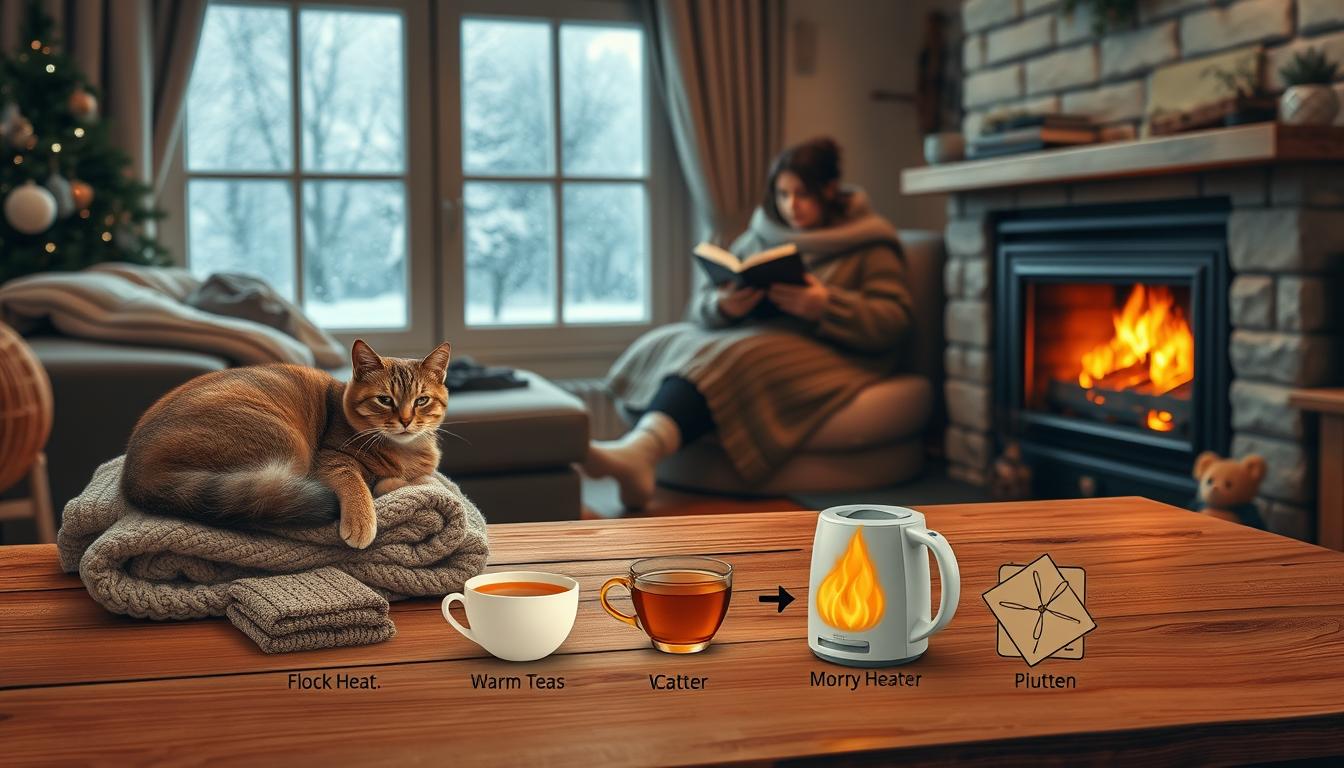
When the power goes out in cold weather, it’s hard to keep your home warm. In snowy or freezing areas, it’s key to have good plans for safety and comfort.
Thank you for reading this post, don't forget to subscribe!Knowing how to heat a room without electricity is vital. Here are tips to help you get ready for power outages. They’ll keep your family warm during winter.
Key Takeaways
- Effective methods for heating without electricity
- Tips for preparing your home for cold weather
- Strategies for staying safe during power outages
- Importance of having a winter emergency plan
- Ways to keep your family warm and cozy
Understanding Heat Loss and Conservation
To stay warm without grid heat, you need to know about heat loss and how to save it. It’s important to understand how your body loses heat and how to keep it in.
How Your Body Loses Heat
Your body loses heat in four ways: conduction, convection, radiation, and evaporation. Conduction happens when you touch something cold. Convection is when cold air touches your skin. Knowing these helps you keep warm.
Basic Principles of Heat Conservation
Keeping warm means losing less heat and keeping it in. Wear the right clothes, use insulation, and seal drafts. Use layers, insulate your home, and seal gaps.
Identifying and Sealing Heat Leaks
Sealing heat leaks is key to keeping warm. Look for gaps around windows, doors, and outlets. Use weatherstripping, caulk, or thermal curtains to block heat loss. For more tips, check out our blog post on staying warm without.
Preparing Your Home for Grid-Down Scenarios
Get ready for when the power goes out by insulating and using other heat sources. Think about using propane heaters or wood-burning stoves.
https://www.youtube.com/watch?v=475x-ql8kpw
Layering and Clothing Strategies
The key to staying warm without electricity is to understand layering and clothing strategies. Your clothes can be your best defense against cold when the grid is down.
The Science of Effective Layering
Effective layering traps warm air close to your body. This reduces heat loss. You wear multiple layers: a base for moisture, a mid-layer for insulation, and an outer for wind.
Best Fabrics for Retaining Body Heat
Choosing the right fabrics is key for keeping warm. Merino wool and synthetic fabrics like polyester are great for base layers. They wick away moisture. For mid-layers, use materials like fleece or down for better insulation.

Extremity Protection: Hands, Feet, and Head
Many body heat losses happen through extremities. Keep your hands warm with insulated gloves, your feet warm with warm socks, and your head warm with a hat. This can greatly reduce heat loss.
Nighttime Warmth Solutions
Staying warm at night needs special strategies. Use thermal sleeping bags and warm pajamas to keep warm while sleeping. Also, hot water bottles near your body can add extra warmth.
Home Insulation and Heat Retention
To stay warm without grid heat, focus on home insulation and heat retention. Proper insulation keeps warmth inside, cutting down on the need for other heating sources.
Creating Warm Zones in Your Home
Creating warm zones in your home is a smart move. Close off unused rooms and use area rugs to insulate floors. This way, you can keep the heat where you need it most, making your home warmer.
For more info on alternative heat sources, check out alternative heat sources for power outages.
Window Insulation Techniques
Windows let a lot of heat out. Use plastic window film or thermal curtains to keep warmth in. These methods help your home stay cozy by blocking heat loss.
Passive Solar Heating Methods
Passive solar heating uses sunlight to warm your home. Open curtains on sunny days and close them at night. This natural method is both cheap and effective.
Using Thermal Mass to Store Heat
Thermal mass materials like concrete or brick absorb and release heat. Adding them to your home design helps store heat during the day. Then, it releases it at night, keeping your home warm naturally.
| Method | Description | Benefits |
|---|---|---|
| Creating Warm Zones | Closing off unused rooms and using area rugs | Concentrates heat in used areas |
| Window Insulation | Using plastic window film or thermal curtains | Reduces heat escape |
| Passive Solar Heating | Harnessing sunlight to warm the home | Cost-effective and efficient |
| Thermal Mass | Using materials like concrete or brick to store heat | Provides consistent warmth |
Simple Ways to Stay Warm Without Grid Heat
There are many simple ways to stay warm without grid heat. These methods are safe and efficient. They can also be good for the planet and save money.
Safe Candle and Oil Lamp Heating
Candles and oil lamps are old but good ways to heat small areas. Make sure they are on stable holders and away from things that can catch fire. Never leave them burning alone.
- Use candle shades to direct heat and reduce fire risk.
- Keep a fire extinguisher nearby.
- Monitor the wick length to prevent excessive smoke.
DIY Heat Sources
DIY heat sources are creative and can save money. For example, you can make a simple heater with a clay pot and candles, called a “clay pot heater.”
Benefits of DIY Heat Sources:
- Customizable to your space.
- Can be made with readily available materials.
- Portable and easy to use.
Wood-Burning Options
Wood-burning stoves and fireplaces are great for heating your home without grid power. They also let you cook. Make sure they are installed and maintained right to avoid chimney fires.

Propane and Kerosene Heaters
Propane and kerosene heaters are portable and work well. But, they need good air flow to avoid poisoning. Always follow the maker’s rules.
Safety Tips:
- Use these heaters in well-ventilated areas.
- Regularly inspect the heaters for damage.
- Store fuel in a safe, well-ventilated area away from living spaces.
By using these simple ways to stay warm without grid heat, you can keep your home safe and warm during power outages. Always put safety first and think about the planet when choosing your heating method.
[link-whisper-related-posts]Conclusion: Preparing for Cold Weather Emergencies
Getting ready for cold weather emergencies means having a plan and the right gear. Knowing how to stay warm without grid heat is key. You can do this by understanding how heat escapes, wearing layers, insulating your home, and using other heating options.
It’s important to have a home emergency kit. This should include a battery-powered radio, flashlights, and non-perishable food. Keeping your thermostat low can also save energy. For more tips, check out Xcel Energy’s guide to staying safe and warm this winter.
By using these tips and being ready, you can stay warm and safe during cold weather emergencies. This is true even when the grid heat is not working. It helps you survive cold weather without grid heat.
FAQ
What are some simple ways to stay warm without grid heat?
You can use candles, oil lamps, and DIY heat sources to stay warm. Wood-burning options and propane or kerosene heaters also work. Layering clothes and improving home insulation help too.
How can I identify and seal heat leaks in my home?
Look for gaps and cracks around windows, doors, and ducts. Use caulk, weatherstripping, or spray foam to seal them. Thermal imaging cameras can help find heat leaks.
What are the best fabrics for retaining body heat?
Wool, fleece, and synthetic fabrics like polyester and nylon keep you warm. They also wick away moisture. Cotton can make you colder when wet.
How can I stay warm at night without grid heat?
Use hot water bottles, electric blankets, or sleeping bags for warmth. Thermal mass can store heat during the day to release at night.
What are some eco-friendly heating options?
Wood-burning stoves, solar ovens, and passive solar heating are eco-friendly. They’re good alternatives to traditional heating.
How can I create warm zones in my home?
Use area rugs, curtains, and blankets to insulate areas. Portable heaters or hot water bottles can also warm up a space.
Are propane and kerosene heaters safe to use?
Propane and kerosene heaters are safe if used correctly. Follow the manufacturer’s instructions and ensure good ventilation. Always follow safety rules.
What are some DIY heat sources I can use?
Try clay pot heaters, candle warmers, or homemade solar ovens. They’re creative ways to stay warm without grid heat.

Subscribe to Our Newsletter