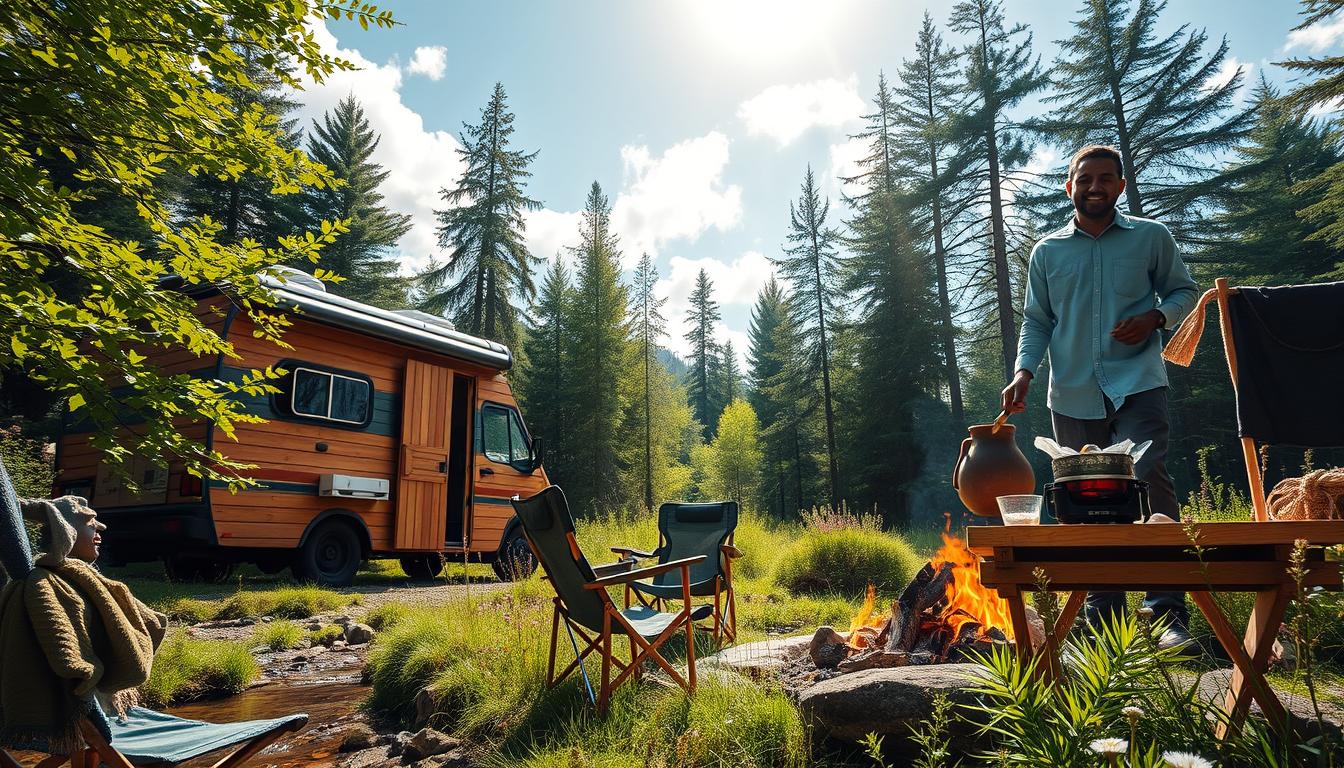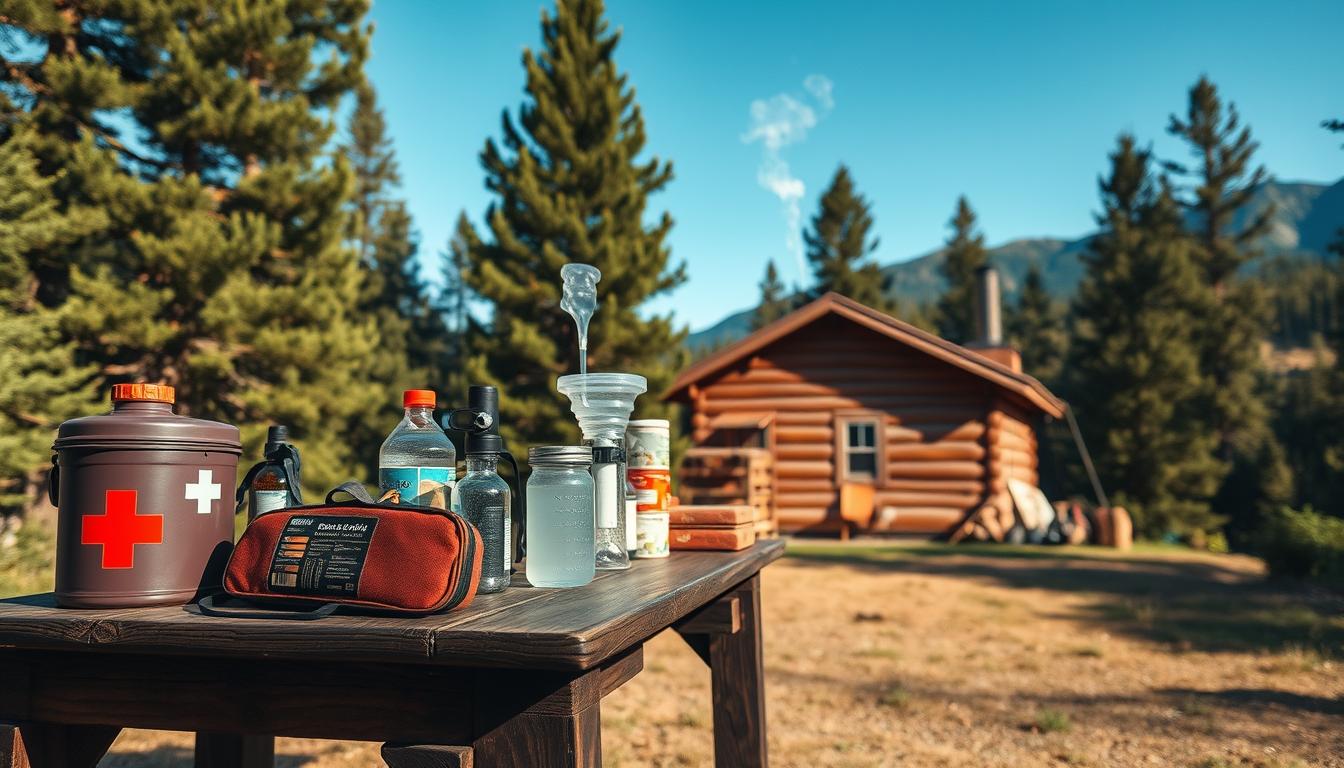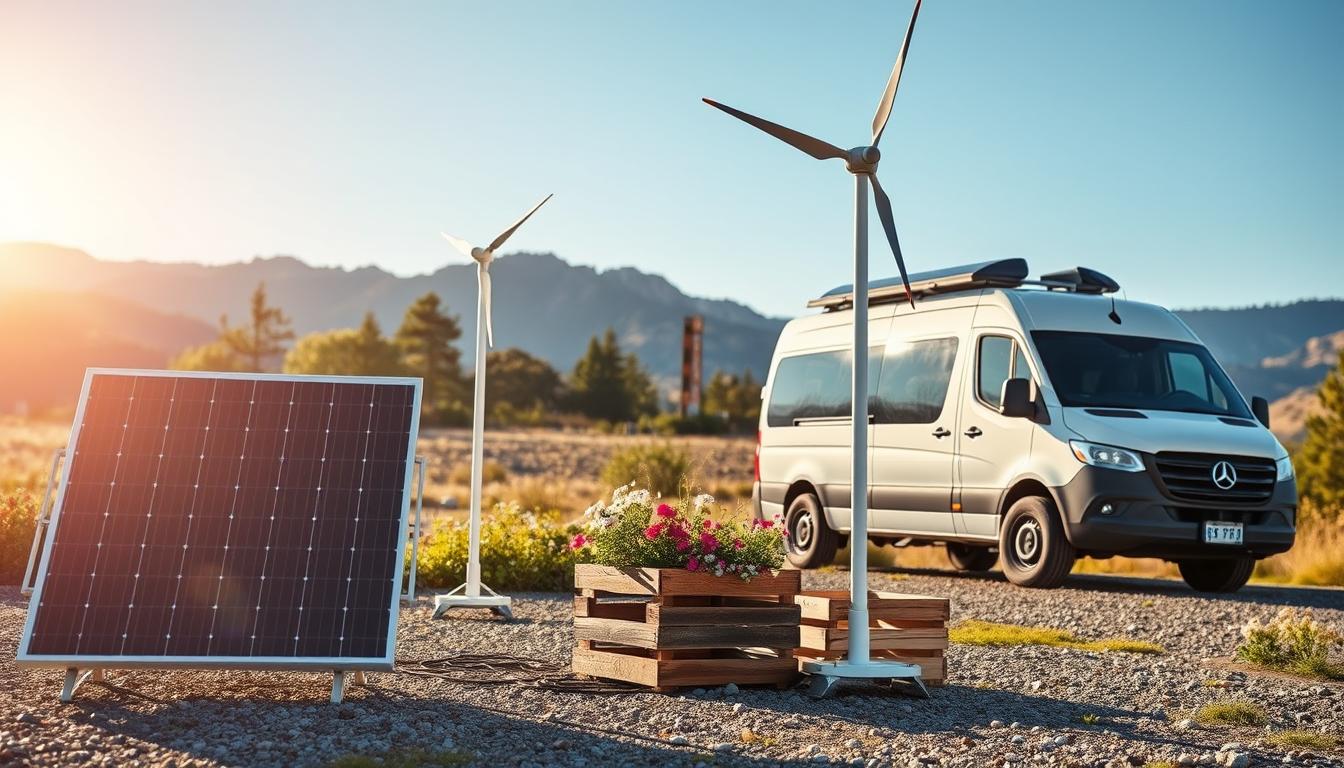
For those who love the freedom of long-term mobile living, having a steady power source is key.
Thank you for reading this post, don't forget to subscribe!RVs and mobile homes need good off-grid power solutions. Solar panels for RV are a top choice. They give clean, green energy.
New tech makes power stations and solar kits easy to use. They’re better for the planet than old generators.
Key Takeaways
- Reliable power sources are essential for long-term mobile living.
- Solar panels and battery storage systems are effective off-grid power solutions.
- Portable power stations offer a convenient alternative to traditional generators.
- Off-grid solar kits provide a sustainable and renewable source of energy.
- Embracing solar power can significantly reduce environmental impact.
Understanding Your Power Needs for Mobile Living
Figuring out your power needs is key when choosing energy solutions for mobile living. Knowing what you need helps pick the right system. This ensures you have power wherever you go.
https://www.youtube.com/watch?v=uc1plSeRC8s
Calculating Your Daily Power Consumption
First, list all your daily electrical items. This includes lights, fridges, laptops, and phones. Then, find out how many watt-hours each uses daily.
For example, a 20W LED light used for 5 hours uses 100Wh. Add up all your devices’ daily use to find your total power needs.
A fridge might use 1000Wh a day. A laptop and its stuff might use 200Wh. Adding these together shows how much power you need daily. This helps decide how big your solar panel or battery should be.
Essential vs. Luxury Power Requirements
It’s important to know the difference between essential and luxury power. Essential power includes things like lights, fridges, and phones. Luxury power is for things like air conditioners and microwaves.
For example, with a battery storage system, focus on essential items when sunlight is low. Portable generators can help in emergencies or when you’re not plugged in.
Seasonal and Climate Considerations
Power needs change with the seasons and weather. In cold places, you might need more for heating. In hot places, air conditioning uses a lot of power.
Knowing this helps size your power systems right. It also helps choose between solar, wind, or portable generators. This makes sure your power system works well in different conditions.
This is very important for power needs for mobile living. It affects your comfort and lifestyle when you’re on the move.
Solar Power Solutions for Mobile Homes
More and more mobile homeowners want to be energy independent. Solar power is a key part of off-grid living. It’s a clean, reliable, and renewable energy source perfect for RVs and vans.

Types of Solar Panel Systems for RVs and Vans
There are many solar panel systems for mobile homes. Monocrystalline solar panels are very efficient and durable. They’re a top pick for RV owners.
Polycrystalline panels are less efficient but cheaper. Thin-film panels are flexible and light, great for some mobile setups. The right panel depends on space, budget, and energy needs.
Installation and Mounting Options
Installing and mounting solar panels right is key. It boosts energy production and system life. Roof mounts are common for RVs and vans, as they’re secure and stable.
Pole mounts let you adjust panel angles for better energy capture. Ground mounts are good for when you’re parked for a while, providing a solid base.
Cost Analysis and Return on Investment
The upfront cost of solar systems is high. But, the long-term savings and benefits are worth it. A solar kit for an RV can cost $1,000 to $5,000.
With savings on fuel and lower maintenance, many see a return on investment in a few years.
Popular Solar Power Kits for Mobile Living
Many companies offer solar kits for mobile living. EcoFlow has kits with solar panels, batteries, and inverters. These kits are easy to use and fit different needs and budgets.
When picking a kit, think about your energy needs, space, and budget. The right solar solution means reliable, sustainable, and cost-effective energy for mobile homes.
Battery Storage Systems for Off-Grid Living
A good battery storage system is key for off-grid living. It stores extra energy from solar panels or other sources. This energy is used when there’s less production.
Lead-Acid vs. Lithium Battery Comparison
There are two main types of batteries: lead-acid and lithium-ion. Lithium batteries, like LiFePO4, last longer and work better than lead-acid batteries. They are great for off-grid living.
Let’s look at how they compare:
| Characteristics | Lead-Acid Batteries | Lithium Batteries |
|---|---|---|
| Lifespan | 3-5 years | 8-12 years |
| Depth of Discharge | 50% | 80-90% |
| Efficiency | 80-85% | 95-98% |
| Cost | Lower upfront cost | Higher upfront cost, but saves money in the long run |
Battery Capacity Planning for Extended Stays
Planning your battery capacity is important for long stays off-grid. You need to figure out your daily energy needs. Make sure your battery bank can handle it. For reliable power in RVs, check out off-grid lithium batteries.
Maintenance, Lifespan, and Replacement Considerations
Keeping your battery system in good shape is vital. Check charge levels, avoid deep discharges, and charge correctly. Lithium batteries need less care than lead-acid ones.
Battery Management Systems and Monitoring
A Battery Management System (BMS) is important. It watches over the battery’s charge, voltage, and temperature. It stops overcharging and deep discharging, which helps your battery last longer.
Power Options for Long Term Mobile Living
There are more ways to get power for mobile living than just solar panels and batteries. These options can make your life on the move better. They offer a reliable and flexible way to power your needs in different places.
Portable Generators: Propane, Gas, and Diesel
Portable generators are great for mobile living. They use propane, gasoline, or diesel, each with its own benefits. For example, propane generators are quiet and good for the environment.
When picking a portable generator, think about how much power it makes, how much fuel it uses, and how loud it is. You can find top portable power stations on Popular Mechanics.
| Fuel Type | Noise Level | Fuel Efficiency |
|---|---|---|
| Propane | Low | High |
| Gasoline | Medium | Medium |
| Diesel | High | High |
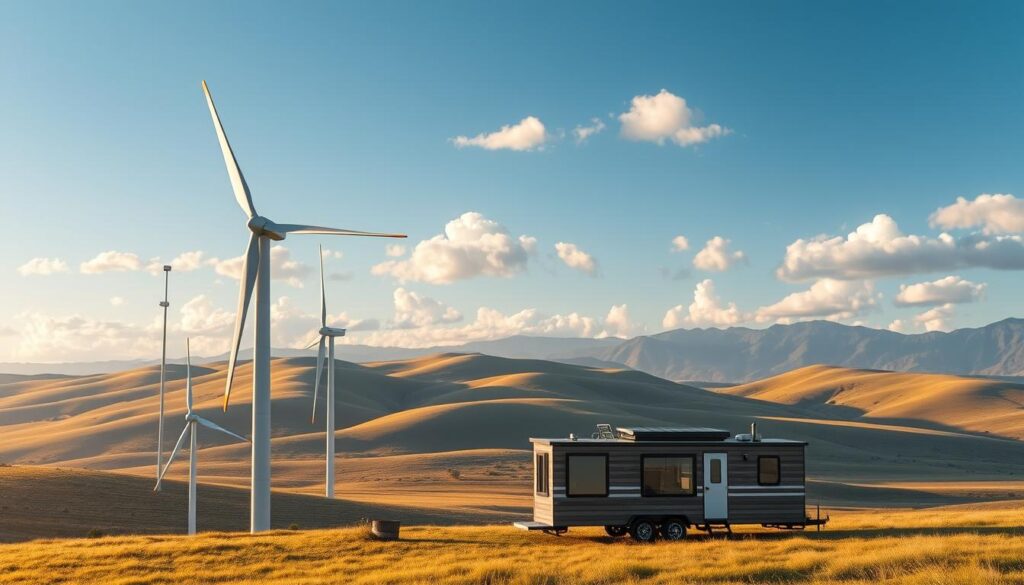
Wind Turbines for Supplemental Power
Wind turbines are a great extra power source for mobile homes. They work best in windy places where solar power isn’t as good. Today’s wind turbines are smaller and quieter, perfect for homes.
When choosing a wind turbine, look at its power output, rotor size, and how easy it is to install.
Shore Power Connections and Adaptations
Shore power lets you use outside power when you’re in one spot for a while. This helps your mobile home’s power system last longer. You might need adapters and converters to fit the shore power to your home’s needs.
Hybrid Power Systems for Maximum Reliability
Hybrid power systems mix different ways to make and store power for the best results. For example, using solar power with a generator and batteries is very reliable. These systems work well in many situations and keep your power on.
In short, looking at other power options can really improve mobile living. By using portable generators, wind turbines, shore power, and hybrid systems, you can make a power solution that fits your life perfectly.
[link-whisper-related-posts]Conclusion: Building a Sustainable Power System for Your Mobile Lifestyle
Creating a reliable power system is key for mobile living. Knowing your power needs and exploring new energy sources is important. This way, you can enjoy life on the move without losing comfort or convenience.
A good power system includes solar power, battery storage, and other reliable sources. These parts work together to give you the power you need.
Think about your daily power use, seasonal changes, and the best power type for you. A good power system lets you live off-grid with confidence. You’ll enjoy a sustainable and self-sufficient lifestyle.
Choosing the right mix of solar power, battery storage, and other energy sources is vital. This creates a reliable and efficient power system for your mobile life. It makes your experience better and helps the environment.
FAQ
What are the most reliable power sources for long-term mobile living?
For long-term mobile living, use solar panels, battery systems, portable generators, and wind turbines. You can mix these to make a hybrid system. This system is very reliable.
How do I calculate my daily power consumption for mobile living?
First, list the appliances you use and their power needs. Then, figure out how long you use them each day. This will tell you how much power you need in watt-hours (Wh) daily.
What is the difference between lead-acid and lithium batteries for off-grid living?
Lead-acid batteries are cheaper but last shorter and can’t be used as much. Lithium batteries are pricier but last longer and work better. They have more energy density.
What are the benefits of using solar power kits for RVs and vans?
Solar power kits are green and save money on fuel. They also cut down on generator use. This makes them a great choice for RVs and vans.
How do I choose the right battery technology for my off-grid living needs?
Think about your energy needs, budget, and appliance types. Look at the battery’s depth of discharge, lifespan, and upkeep needs. This will help you pick the best battery.
What are hybrid power systems, and how do they work?
Hybrid systems mix solar, wind, and generators for power. They’re tailored to your needs. This makes them efficient and can save money.
Can I use a portable generator as a primary power source for my mobile home?
Portable generators are good for backup or extra power. They’re not the best for main power. They might not be efficient or cost-effective.
How do I maintain and monitor my battery storage system?
Use a battery management system (BMS) to watch your battery’s health. Check terminals, charge and discharge right, and do equalization charges when needed. This keeps your system running well.

Subscribe to Our Newsletter