Effective wastewater management is key for living off the grid. In remote areas, managing waste right is vital. It keeps the environment clean and living conditions healthy.
Thank you for reading this post, don't forget to subscribe!Knowing the basics of wastewater management is important. It helps choose the right septic system. For off-grid living, using sustainable practices is a must. This reduces harm to the environment.
A good off-grid wastewater solution is the SepticJohn Whole Household Incinerator System. It efficiently handles household waste.
Key Takeaways
- Efficient wastewater management is key for off-grid living.
- Knowing greywater and blackwater is vital for the right septic system.
- Using sustainable practices helps the environment.
- Reliable off-grid solutions, like SepticJohn, manage waste well.
- Good waste management keeps the environment clean and living healthy.
The Challenges of Waste Management in Off-Grid Settings
Off-grid living comes with its own set of waste management challenges. It means you can’t use city sewage systems. So, you have to handle waste on your own property.
Environmental and Health Considerations
Managing waste properly is key to avoid environmental and health problems. Bad waste management can pollute water and soil. This is a big risk to the health of those living there.
Sustainability Goals for Off-Grid Living
For off-grid dwellers, using eco-friendly waste solutions is essential. It’s not just a choice, but a must for living sustainably.
Reducing Environmental Impact
To lessen waste’s environmental impact, effective management is needed. This includes systems that recycle or treat wastewater properly.
Resource Conservation Principles
Off-grid living emphasizes resource conservation. Using systems that reuse water or turn waste into something useful is key. For more info on off-grid wastewater treatment, check out ecojohn.com.
By using sustainable waste management, off-grid residents can greatly reduce their environmental impact. They can also keep their living space healthy and safe.
Off Grid Waste and Septic System Options Overview
The right septic system is key for off-grid living. It affects the environment and your daily life. Choosing the right system is important for sustainable living.
Traditional vs. Alternative Systems
Traditional septic systems are common but might not fit all off-grid places. Alternative septic systems offer new solutions for off-grid needs.
These alternatives include composting toilets and dry toilets. They use less water and harm the environment less.
Selecting the Right System for Your Location
Many factors influence the right septic system choice. These include climate, soil, and terrain.
Climate Considerations
In cold places, you need systems that handle freezing. In hot areas, systems must handle heat and drought.
Soil and Terrain Factors
The soil and terrain of your location matter a lot. For example, poor soil might need special systems like mounds.
| System Type | Water Usage | Maintenance | Environmental Impact |
|---|---|---|---|
| Traditional Septic | High | Regular | Moderate |
| Composting Toilet | Low | Regular | Low |
| Incinerating Toilet | None | High | High |
| Dry Toilet | None | Regular | Low |
Understanding these factors helps off-grid residents choose wisely. This balance meets their needs and protects the environment.
Composting Toilet Systems
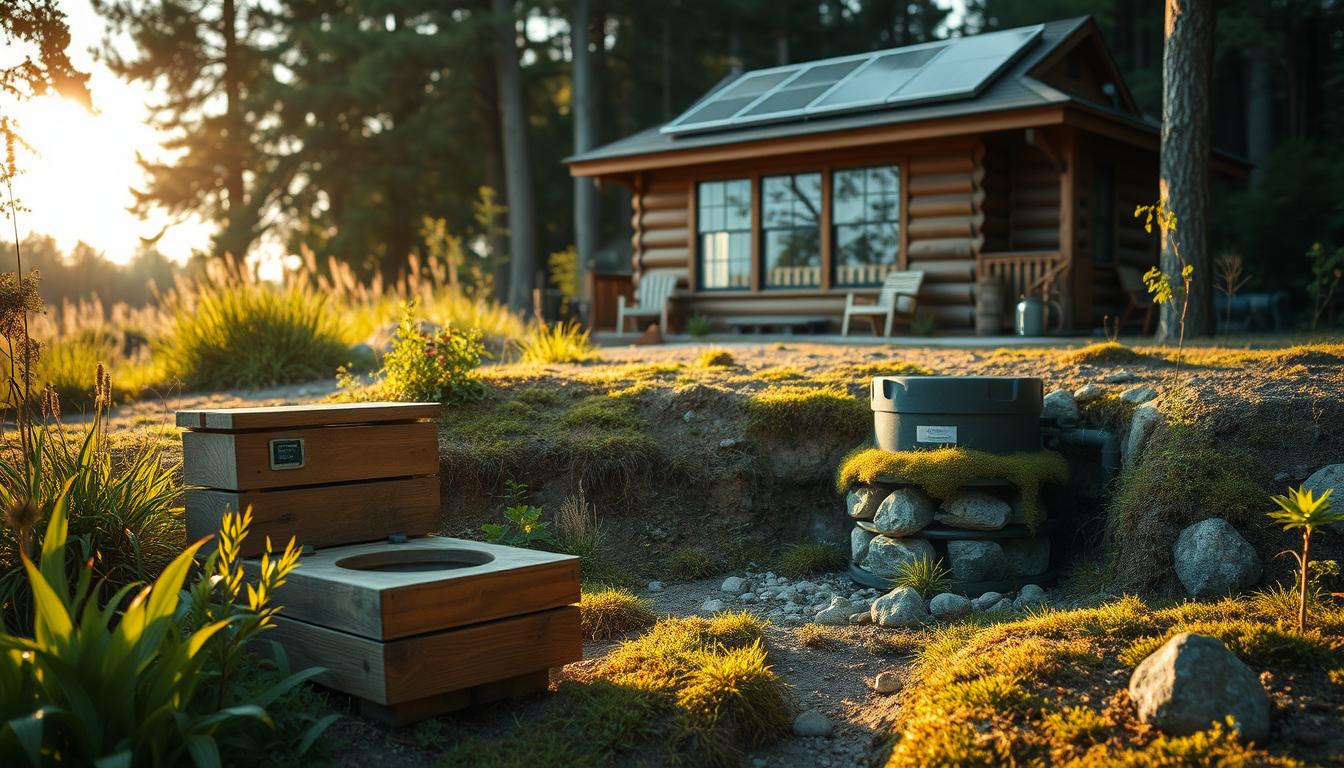
Composting toilets are great for off-grid living. They turn human waste into compost. This compost can be used as fertilizer, cutting down on sewage needs.
Self-Contained Units
Self-contained composting toilets are a top pick for off-grid homes. They are small and efficient. They handle both the toilet and composting in one unit. For more info, check out this guide.
Central Composting Systems
Central composting systems are bigger. They can serve many toilets or a whole house. They need more space and upkeep but work well for big off-grid groups.
Cost and Maintenance Requirements
The cost of composting toilets varies a lot. It depends on the system’s type and complexity. Knowing the upfront cost and ongoing upkeep is key to a good choice.
Initial Investment
The cost to start can be from a few hundred to several thousand dollars. This depends on the system’s size and complexity.
Ongoing Maintenance Tasks
- Regularly check and keep the composting process going
- Make sure there’s enough carbon-rich materials for composting
- Watch the moisture and temperature levels

Waterless Toilet Alternatives
Looking for ways to be kind to the planet, people have found many waterless toilet options. These are great for living off the grid and managing waste in a green way.
Incinerating Toilets
Incinerating toilets burn waste with electricity, leaving just a bit of ash. This is a clean and waterless choice, perfect for places where water is hard to find.
Dry Toilets and Humanure Systems
Dry toilets and humanure systems turn waste into compost. They need regular care but are a good way to manage waste.
Freezing Toilets
Freezing toilets freeze waste, then it’s thrown away or composted. This method uses a lot of energy but is another option without water.
Energy Requirements
The energy needed for these toilets is different. Incinerating toilets use a lot of electricity. Freezing toilets also need a lot of energy to work.
Practical Considerations
Things to think about include upkeep, cost, and how easy they are to use. For example, incinerating toilets are easy to keep up but might cost more at first.
When picking a waterless toilet, think about how it affects the planet and its practical side.
Greywater Management Solutions
For those living off the grid, managing greywater is very important. Greywater comes from sinks, showers, and washing machines. It can be reused with the right systems.
Simple Diversion Systems
Simple diversion systems are a good start for greywater management. They send greywater to irrigation systems or other uses. This cuts down on wastewater.
Constructed Wetlands and Biofilters
For more complex needs, constructed wetlands and biofilters are great. They use natural processes to treat and reuse greywater. This supports sustainable off-grid living.
Integration with Garden Irrigation
Using greywater in garden irrigation saves water and makes soil better. Important things to think about include:
- Choosing plants that do well in greywater
- Changing irrigation schedules with the seasons
Plant Selection for Greywater Systems
Picking the right plants is key for greywater irrigation systems. Plants that handle the nutrients and possible contaminants in greywater work best.
Seasonal Adjustments
Adjusting greywater irrigation systems with the seasons is important. It helps water plants well all year. This might mean changing when you water or how much water you use.

Advanced Septic System Designs
Septic system technology has grown a lot. Now, we have better ways to manage waste. These new designs work well in different soils and climates.
Mound Systems for Challenging Soils
Mound systems are great for bad soil. They make a raised bed to treat wastewater. This is a good fix for hard terrains.
Sand Filter Systems
Sand filter systems use sand to clean wastewater. They are easy and work well. They’re good when regular septic systems won’t do.
Aerobic Treatment Units
Aerobic treatment units (ATUs) use oxygen to break down waste. They treat waste better and need less upkeep.
Energy Requirements
ATUs need energy to work. This is something to think about for systems without power. But, many ATUs use less energy now.
Performance in Various Climates
Advanced septic systems work differently in different weather. For example, mound systems might freeze in cold weather. But, sand filter systems work well in many temperatures.
| System Type | Energy Requirement | Climate Suitability |
|---|---|---|
| Mound Systems | Low | Variable |
| Sand Filter Systems | Low to Moderate | Wide Range |
| Aerobic Treatment Units | Moderate to High | Wide Range |
Regulations and Permitting for Off-Grid Waste Systems
Understanding regulations and permits is vital for off-grid wastewater management. The rules change a lot from state to state and county to county. It’s important to know what’s needed locally.
State and County Variations
Off-grid waste systems face different rules based on local conditions. For example, Oregon’s rules might be very different from others.
Working with Local Health Departments
Working with local health departments is key. They help make sure you follow the rules. They guide you on what permits you need and how to get them.
Common Regulatory Challenges
Some big challenges are getting variances and meeting documentation needs. Variances are needed when standard rules don’t fit your system’s unique situation.
Obtaining Variances
To get a variance, you must show your system meets the rules’ intent.
Documentation Requirements
You’ll need to provide detailed plans. This includes your system’s design and how you’ll keep it up.
[link-whisper-related-posts]Conclusion
Choosing the right Off Grid Waste and Septic System Options is key for living off the grid. It’s important to know what’s available and what they mean. This helps homeowners make choices that are good for the planet and their health.
Think about the cost, how much upkeep it needs, and local rules. This way, you can pick a system that works for you and helps the planet in the long run. Good waste management keeps our environment clean and supports living off the grid.
FAQ
What are the main types of wastewater generated in off-grid settings?
In off-grid settings, there are two main types of wastewater. Greywater comes from sinks, showers, and washing machines. Blackwater is from toilets.
What are the benefits of using composting toilets as an off-grid sewage solution?
Composting toilets save water and reduce wastewater. They also make a nutrient-rich compost for fertilizer.
How do I choose the right off-grid waste and septic system for my location?
Choose based on climate, soil, terrain, and local rules. Composting toilets and greywater systems might be better for some places.
What are the different types of waterless toilet alternatives available?
There are incinerating, dry, and freezing toilets. Each needs different energy and has its own uses.
How can greywater be managed and reused in off-grid settings?
Use simple systems, wetlands, or biofilters to manage greywater. It’s great for irrigation, saving water for plants.
What are the regulatory challenges associated with implementing off-grid waste systems?
Rules vary by state and county. You might need variances or to meet certain standards. Always check local laws first.
What are the advantages of using advanced septic system designs, such as mound systems and aerobic treatment units?
Advanced systems work better in tough soils or climates. They’re reliable and good for the environment.
How can I ensure that my off-grid waste and septic system is environmentally friendly?
Look for systems that save energy and water. Choose ones that reuse wastewater and are designed to be green.
What are the ongoing maintenance requirements for composting toilets and other off-grid waste systems?
Regular tasks include emptying chambers and checking parts. Also, watch how well the system works.
Can I use an off-grid waste and septic system in a cold climate?
Yes, but pick a system made for cold weather. Some, like aerobic units, might need extra insulation or heat.

Subscribe to Our Newsletter