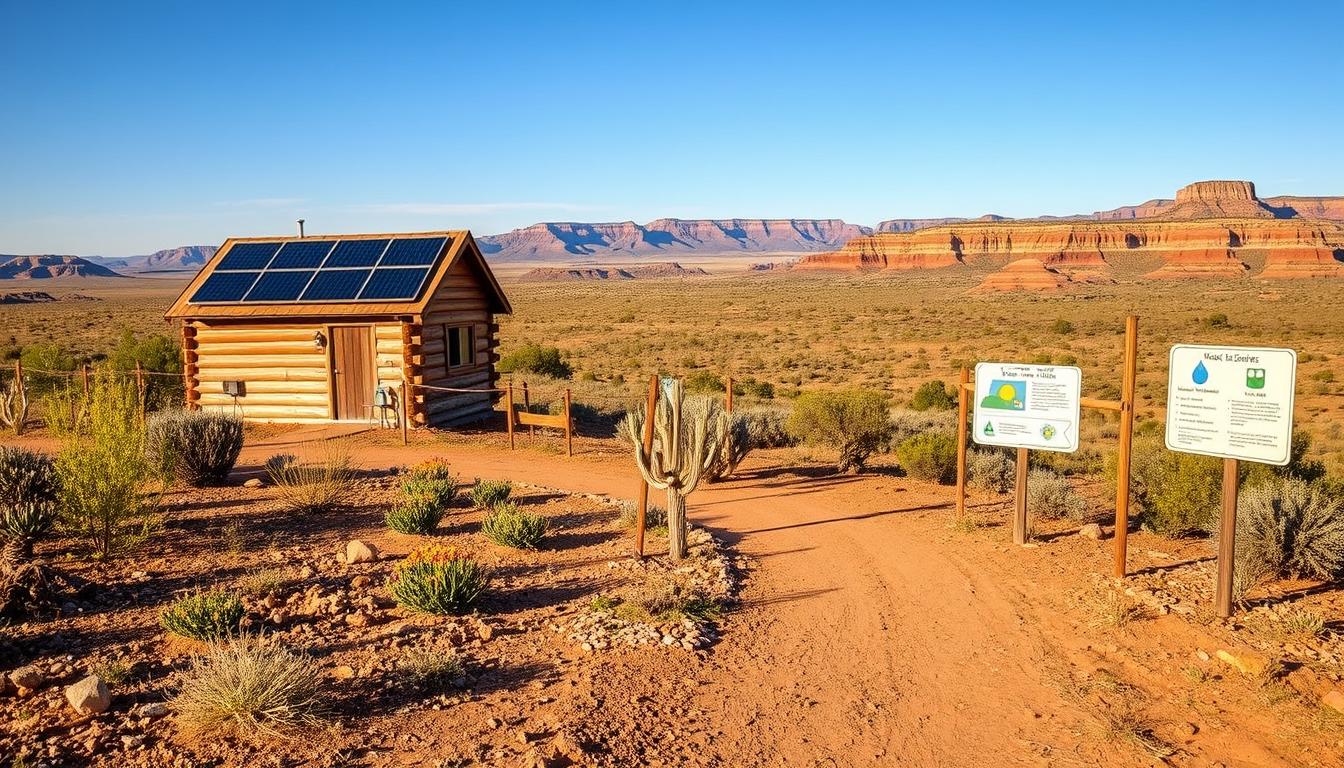
New Mexico is a top choice for those wanting to live off the grid. It’s known for its sustainable living laws and vast open spaces.
Thank you for reading this post, don't forget to subscribe!More and more people are choosing off-grid living. It’s important to know the rules that come with it.
The state offers a special place for those who want to live without usual utilities. But, it’s key to understand New Mexico off grid regulations to make the move easy.
This article will cover the main points of off-grid living in New Mexico. We’ll talk about zoning, building codes, water rights, and energy systems.
Key Takeaways
- Knowing New Mexico’s off-grid rules is key for a smooth transition.
- Zoning rules help decide where you can live off-grid.
- Building codes and permits keep you safe and in line.
- Water rights and energy systems are vital for off-grid living.
- New Mexico’s laws support living in an eco-friendly way.
Overview of Off Grid Living Laws and Rules in New Mexico
New Mexico has laws that let people live off the grid. This means they don’t rely on public utilities. Instead, they use their own systems for water, electricity, and waste.
Off-grid living is getting more popular here. It’s good for the environment and makes people more independent. For more info, check out The Land Geek’s blog on off-grid laws in New Mexico.
What Constitutes Off-Grid Living in New Mexico
In New Mexico, off-grid living means not using the main grid for electricity, water, or sewage. People do this in different ways, like:
- Using renewable energy like solar or wind power
- Collecting rainwater
- Using composting toilets or septic systems for waste
Why New Mexico Attracts Off-Grid Enthuasiasts
New Mexico is great for off-grid living because of its climate and laws. The sun shines a lot, perfect for solar energy. The state’s zoning laws also let people build off-grid homes easily.
The state’s natural resources and laws make it a top choice for those wanting to live off the grid. As more people want this lifestyle, knowing the laws in New Mexico is key.
Legal Framework for Off-Grid Properties
Off-grid fans in New Mexico face a complex legal setup. This setup includes many rules and areas of control. These rules can greatly affect living off the grid.
State vs. County Jurisdiction
New Mexico’s off-grid rules come from both the state and counties. Knowing who does what is key to following the law. State laws set broad standards, while county rules offer more specific advice based on local needs.
Key aspects to consider include:
- Building codes and zoning laws
- Environmental regulations
- Health and safety standards
Land Use Classifications
Land use types are very important in New Mexico. Properties are often labeled as agricultural, residential, or for conservation. Off-grid homes must follow the rules for their land type.

Legal Residence Requirements
To legally live in New Mexico, you must meet certain rules. Off-grid homeowners need to follow these to stay out of trouble. This includes getting permits, registering with local officials, and meeting dwelling standards.
Important considerations for legal residence include:
- Obtaining necessary permits for construction and utilities
- Registering the property with local authorities
- Complying with minimum dwelling standards
Building Codes and Zoning Regulations
Living off-grid in New Mexico means knowing the state’s building codes and zoning laws. These rules help make sure off-grid homes are safe and follow local rules.
Alternative Building Methods and Codes
New Mexico lets you build homes differently, like earthships and adobe. But, these homes must follow certain building codes. Alternative building methods offer flexibility and sustainability for off-grid residents. For example, earthship homes use natural and recycled materials. They keep homes cool and use less energy.
Earthship and Adobe Construction Regulations
Earthship and adobe homes are common in New Mexico because of the state’s soil and climate. Rules for these homes focus on lasting well, being safe, and good for the environment. Builders must ensure that their structures meet specific standards for keeping warm or cool, insulation, and weather resistance.
Minimum Square Footage Requirements
How big a home must be varies by county. These rules help homes be big enough for living comfortably. Off-grid residents need to know these rules when planning their homes. Checking with local authorities is key to avoid problems.
Zoning Restrictions by County
Zoning rules in New Mexico change a lot from county to county. Some areas are more open to off-grid living, while others are stricter. Off-grid residents must look up the zoning rules in their county to follow them.
Water Rights and Management Laws
Knowing about water rights is key for off-grid living in New Mexico. The state’s laws help manage water well. This affects how off-grid properties work.
Rainwater Harvesting Legalities
Rainwater harvesting is important for off-grid living. It lets people collect and store rainwater for different uses. In New Mexico, collecting rainwater is legal but there are rules to follow.
Key aspects of rainwater harvesting regulations include:
- Permits may be needed for big harvesting systems.
- Collected rainwater is usually okay for non-drinking uses.
- Systems must stop water from getting dirty.
Well Drilling Permits and Requirements
Drilling a well is a big job that needs to follow state rules. In New Mexico, you need a permit to drill a well. There are certain things you must do.
| Permit Requirement | Description |
|---|---|
| Well Drilling Permit | You must have one to drill a new well or change an old one. |
| Water Rights Allocation | You need to get water rights before drilling, to make sure you have them. |
| Well Construction Standards | Wells must be built to state standards to keep water clean. |
Greywater Systems Regulations
Greywater systems, which use water from sinks, showers, and washing machines, have rules in New Mexico. These systems can save a lot of water.
Approved Greywater Uses
Greywater is usually okay for watering plants and flushing toilets. But it must meet certain clean water standards.
System Design Requirements
Greywater systems need to be designed to keep people safe and work right. Important design needs include:
- They must be the right size for the water they handle.
- They need treatment to cut down on germs and dirt.
- They should be checked and kept up regularly.

Energy Systems and Utilities Regulations
New Mexico has rules to help off-grid homes use renewable energy systems. These rules cover solar, wind power, and off-grid electricity standards.
Solar Energy Installation Requirements
New Mexico encourages solar energy use with tax breaks and rules. Homeowners get tax breaks for solar systems. They must follow the New Mexico Energy Transition Act to install solar systems. This includes getting permits and meeting building codes.
Wind Power Permits and Restrictions
Wind power is also supported in New Mexico. But, setting up wind turbines needs special permits. The process checks the turbine’s impact on the environment and neighbors. Homeowners should talk to local officials about wind power permits and rules.
Off-Grid Electricity Compliance Standards
Off-grid homes must follow electricity standards for safety. New Mexico sets rules for off-grid energy systems. These rules aim for reliable and green energy. Homeowners need to check their systems often to avoid electrical dangers.
Following these rules helps off-grid homes in New Mexico get clean energy. It also helps the state meet its renewable energy goals.
Waste Management and Sanitation Requirements
Knowing about waste management and sanitation is key for off-grid living in New Mexico. It’s not just about health. It’s also about protecting the environment.
New Mexico has rules for waste management. This includes composting toilets, septic systems, and solid waste disposal. These rules change by county. So, it’s important for off-grid folks to know the local laws.
Composting Toilet Regulations
Composting toilets are great for saving water and making less wastewater. In New Mexico, composting toilets are allowed. But, there are some rules to follow.
- Composting toilets must be installed as the maker says.
- They need regular upkeep to work right.
- Some places might ask for permits or checks.
Septic System Installation Rules
If you don’t use composting toilets, septic systems are another option. New Mexico has strict septic system installation rules.
| System Type | Permit Required | Inspection Frequency |
|---|---|---|
| Conventional Septic | Yes | Every 3 years |
| Alternative Septic | Yes | Annually |
Solid Waste Disposal Requirements
Off-grid folks also need to handle solid waste well. New Mexico’s rules focus on recycling and proper disposal.
For more info on off-grid rules in New Mexico, check out The Land Geek’s blog on off-grid.
Good waste management is vital for off-grid living. By following New Mexico’s rules, off-grid folks help keep the environment and community healthy.
[link-whisper-related-posts]Conclusion
Knowing off-grid living laws is key for a good off-grid life in New Mexico. The state’s landscape and climate are perfect for those wanting to live sustainably.
New Mexico has rules for off-grid homes, like building codes and water rights. Following these laws helps you live in harmony with nature and the community.
To start off-grid living well, do your homework and plan carefully. Learn about local rules, get the right permits, and use green practices. This way, you’ll leave a small mark on the environment.
By following off-grid laws and living sustainably, you can have a fulfilling self-sufficient life. You’ll also help keep New Mexico’s beauty for future generations.
FAQ
What are the zoning regulations for off-grid living in New Mexico?
Zoning rules for off-grid living in New Mexico change by county. Some counties have stricter laws than others. Always check the zoning laws in the county where you plan to live off-grid.
Are there any specific building codes for off-grid homes in New Mexico?
Yes, New Mexico follows the 2018 International Residential Code (IRC) and the 2018 International Building Code (IBC). These codes have rules for off-grid homes. Some counties also have their own building codes.
Is rainwater harvesting allowed in New Mexico?
Yes, you can harvest rainwater in New Mexico. But, you must follow certain rules. The New Mexico Office of the State Engineer has information on the laws and guidelines.
What are the requirements for well drilling permits in New Mexico?
To drill a well in New Mexico, you need a permit from the New Mexico Office of the State Engineer. You must apply, pay a fee, and follow state rules on well construction and water use.
Can I use greywater systems in my off-grid home in New Mexico?
Yes, greywater systems are okay in New Mexico. But, they must be set up and installed according to state rules. The New Mexico Environment Department has guidelines for designing, installing, and using greywater systems.
What are the regulations for solar energy installation in New Mexico?
Solar energy installation in New Mexico is overseen by the New Mexico Public Regulation Commission (PRC). The PRC has rules for permits, inspections, and connecting to the grid.
Are there any incentives for off-grid energy systems in New Mexico?
Yes, New Mexico has incentives for renewable energy systems like solar and wind. The New Mexico Renewable Energy Production Tax Credit and the Solar Market Development Tax Credit offer tax credits for installations.
What are the regulations for composting toilets in New Mexico?
Composting toilets are allowed in New Mexico. But, they must be installed and kept up with state rules. The New Mexico Environment Department has guidelines for installation, maintenance, and use.
How do I obtain a permit for a septic system in New Mexico?
To get a permit for a septic system in New Mexico, apply to the local health department or the New Mexico Environment Department. You’ll need to provide site plans, soil tests, and other details.
What are the solid waste disposal requirements for off-grid homes in New Mexico?
Off-grid homes in New Mexico must follow state rules for solid waste disposal. This means storing and disposing of waste in a way that doesn’t harm the environment or public health.

Subscribe to Our Newsletter