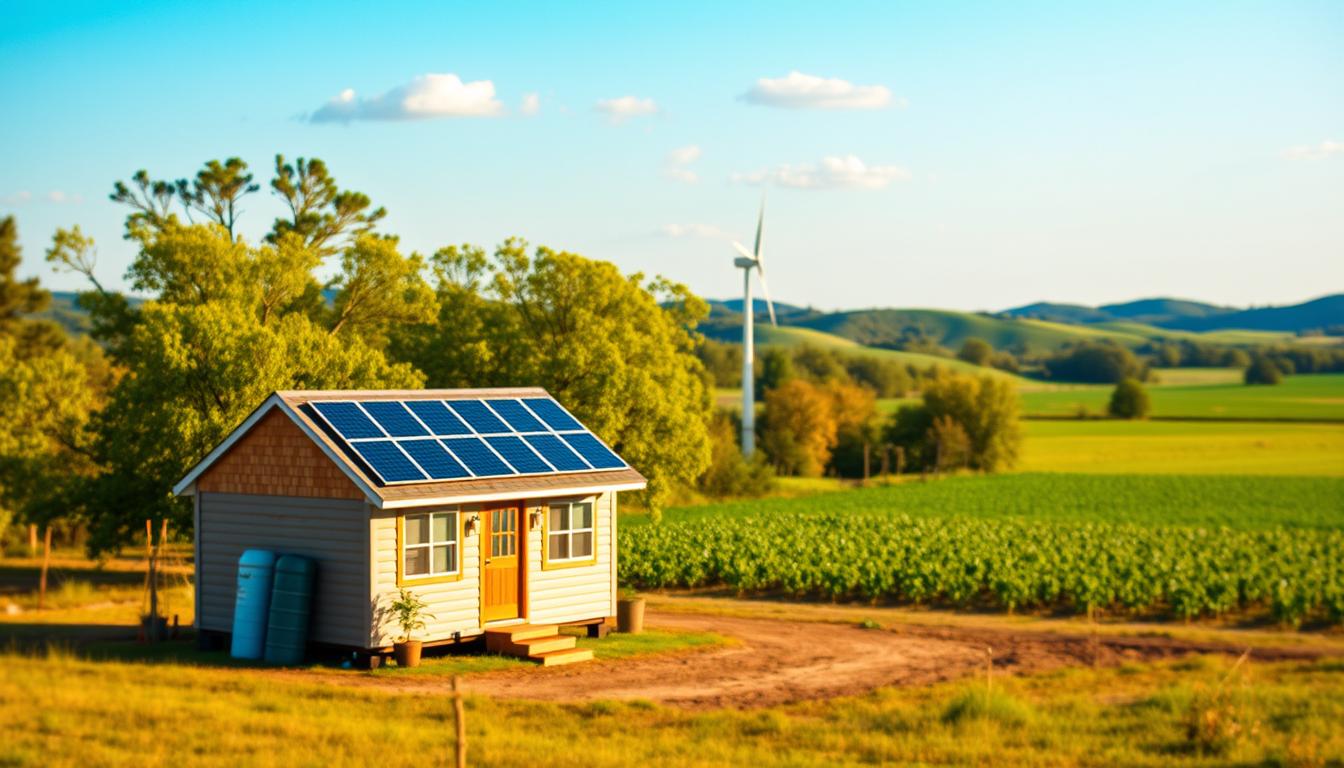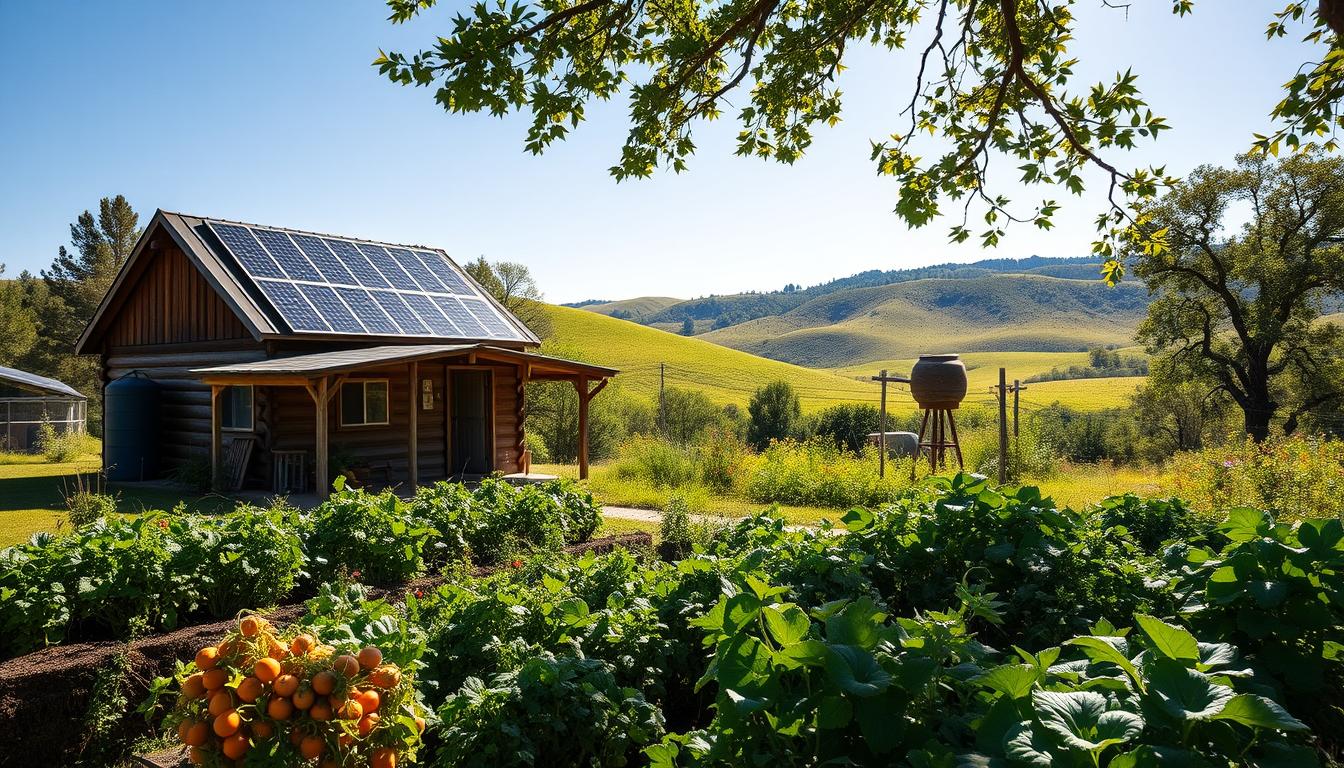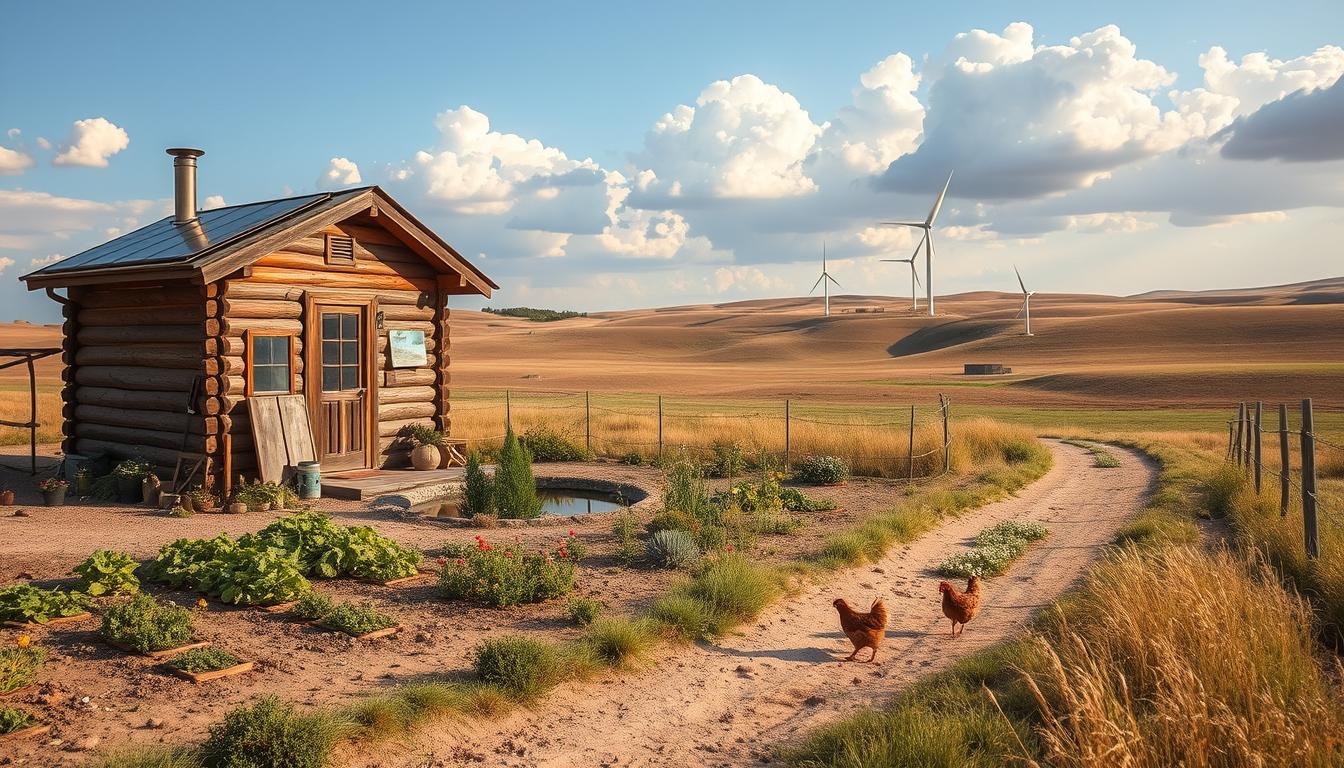
Kansas is famous for its farming and homesteading. It’s a great place for those who want off-grid living. The state’s rural areas have fewer rules, making it easier to live off the grid. Knowing the local laws is key for those who want to live this way.
Thank you for reading this post, don't forget to subscribe!The legal rules for off-grid living in Kansas are pretty open. You can make your own electricity with solar panels or wind turbines. Also, collecting rainwater is okay, and some places let you have wells or ponds. This helps people live on their own.
Key Takeaways
- Off-grid electricity generation is legal in Kansas.
- Rainwater harvesting is permitted without needing a permit for non-potable uses.
- Zoning laws are relatively relaxed, even in rural areas.
- Some counties have specific rules for wells and ponds.
- Kansas law allows for the use of solar panels and wind turbines.
Understanding Off-Grid Living in Kansas
Off-grid living is becoming more popular in Kansas. But what does it really mean? It’s about living without public utilities like electricity, water, and sewage.
What Constitutes Off-Grid Living
Off-grid living means using renewable energy, collecting rainwater, and growing your own food. It’s about living on your own terms, away from city services. This way, you can live in tune with nature.
Kansas’s Stance on Self-Sufficient Living
Kansas welcomes off-grid living, mainly in rural areas. Zoning laws are less strict here. You can have tiny homes on wheels or permanent ones.
The state’s laws support living off the grid. You just need to follow local building codes and zoning rules.
Most Accommodating Counties for Off-Grid Lifestyles
Counties like Smith County and Osborne County are great for off-grid living. They have few zoning rules and easy building codes. These places are perfect for those wanting to live off the grid.
These counties make it easy to live off the grid. You can live self-sufficiently while following local rules.
Building Codes and Zoning Regulations for Off-Grid Properties
Living off-grid in Kansas is shaped by local building codes and zoning rules. Kansas doesn’t have one set of building codes for the whole state. But, the rules can change a lot from one county to another. This affects off-grid property owners a lot.
County-Specific Building Requirements
Different counties in Kansas have their own building codes. For example, some counties follow the International Residential Code (IRC). This code allows tiny homes under certain rules. It’s important for off-grid folks to know the building rules in their county.
Key counties and their building codes:
| County | Building Code Adopted |
|---|---|
| Johnson County | IRC with local amendments |
| Douglas County | IRC |
| Shawnee County | Local building codes |
Minimum Square Footage and Structural Standards
The size and structure of homes vary by county in Kansas. Some counties might need homes to be at least 600 square feet. Others might be more flexible.

Zoning Restrictions for Rural Properties
Zoning laws in rural Kansas are less strict but important. They help decide how off-grid properties can be used. Knowing these rules is key for planning off-grid homes.
- Setback requirements
- Height restrictions
- Land use regulations
Permits and Approval Processes
Getting the right permits is a big step for off-grid properties in Kansas. The permits needed depend on the project, location, and local rules.
Common permits required:
- Building permit
- Electrical permit
- Plumbing permit
- Zoning permit
Off Grid Living Laws and Rules in Kansas: Utilities and Resources
If you’re thinking about off-grid living in Kansas, it’s important to know the state’s rules. Kansas has laws that help balance self-sufficiency with protecting the environment.
Water Collection and Well Regulations
Kansas has rules for water use, thanks to the Kansas Water Appropriation Act. This Act decides who gets water first, based on when they started using it.
Key aspects of water regulations include:
- Permits are needed for water use.
- Water use must be good and not wasteful.
- Those who used water first get priority.
Sewage and Waste Management Requirements
Off-grid living in Kansas means following rules for sewage and waste. You can use septic systems or compost toilets, but local health rules apply.
For more info on tiny homes and off-grid sewage, check out Tiny Home Regulations in Kansas.
Solar and Alternative Energy Regulations
Kansas encourages using solar and alternative energy for off-grid living. There are few rules for installing and using solar panels, making it a good choice for energy independence.
| Energy Source | Regulatory Environment | Off-Grid Feasibility |
|---|---|---|
| Solar Energy | Favorable, with few restrictions | Highly feasible |
| Wind Energy | Generally supportive, subject to local zoning | Feasible, depending on location |
| Hydro Energy | Regulated by water rights and permits | Feasible for those with access to suitable water resources |
Electricity Independence and Grid Disconnection Rules
Kansas lets you be your own power source and disconnect from the grid. But, know the rules and how they affect your energy freedom.
Knowing these rules is essential for off-grid living in Kansas. By understanding the laws, you can enjoy a self-sufficient lifestyle in the state.
Land Use and Self-Sufficiency Regulations
Kansas supports off-grid living with its laws. These laws help with self-sufficiency and follow important rules.
Property Tax Considerations for Off-Grid Properties
Off-grid property owners in Kansas get good tax breaks. The state’s laws can lower property taxes for those who follow state rules. Key benefits include:
- Lower tax rates for agricultural land
- Homestead property tax exemptions
Kansas Homestead Exemption Laws
The Kansas homestead exemption helps homeowners, including off-grid ones. It can lower property taxes a lot. To get it, homeowners must meet certain rules, like living there and having a certain property value. More info is in the Kansas Legislature’s document on homestead exemptions.
Agricultural Land Designations and Benefits
Kansas offers many perks for agricultural land. It helps farmers and off-grid folks who grow their own food. Benefits include tax breaks and subsidies for farming. To get these, landowners must follow state guidelines for agricultural use.
Hunting, Farming, and Food Production Regulations
Kansas has rules for hunting, farming, and food making. These rules cover wildlife, farming, and food safety. Following these rules is key for off-grid food systems.

By following these rules, off-grid folks in Kansas can live more self-sufficiently. They also help the state’s agriculture and environment.
[link-whisper-related-posts]Conclusion: Navigating the Legal Landscape of Off-Grid Living in Kansas
Kansas is a great place for off-grid living because of its laws. Knowing the legal off grid living laws is key for a good off-grid life.
To do well in off-grid living, you must follow Kansas’s rules. This includes building codes, zoning laws, and utility rules. Learning these rules helps off-grid folks live well on their own.
Living off-grid in Kansas has many perks. With the right info, you can handle the legal stuff easily. Kansas’s laws help people live more sustainably.
Following these laws lets Kansas folks enjoy off-grid living’s freedom. It’s a great spot for those wanting a more independent life.
FAQ
What are the laws regarding off-grid living in Kansas?
Kansas has few rules for off-grid living, making it easy in rural areas. You can use solar panels or wind turbines for electricity.
Is rainwater harvesting allowed in Kansas?
Yes, collecting rainwater is legal in Kansas. Some areas even let you have wells or ponds.
Are tiny homes allowed in Kansas?
Yes, many counties in Kansas allow tiny homes. Some have rules, like size requirements.
What are the building codes for off-grid properties in Kansas?
Some areas follow the International Residential Code for tiny homes. But, each county has its own rules.
How does the Kansas Water Appropriation Act affect off-grid living?
The Act controls water use in Kansas. Off-grid folks must follow it when using water.
What are the regulations surrounding sewage and waste management for off-grid properties in Kansas?
Off-grid homes in Kansas must follow rules for sewage and waste. This includes septic systems and compost toilets.
Can I disconnect from the grid and generate my own electricity in Kansas?
Yes, Kansas lets you make your own electricity. Many use solar panels or wind turbines.
How do Kansas’s homestead exemption laws benefit off-grid homeowners?
The homestead exemption in Kansas can save a lot on taxes. It helps off-grid homeowners too.
Are there any specific regulations for agricultural land designations in Kansas?
Yes, Kansas has rules for agricultural land. These can help off-grid folks who farm or do other agricultural work.
What are the property tax considerations for off-grid properties in Kansas?
Off-grid property owners in Kansas should know about taxes. The homestead exemption can help save money.

Subscribe to Our Newsletter