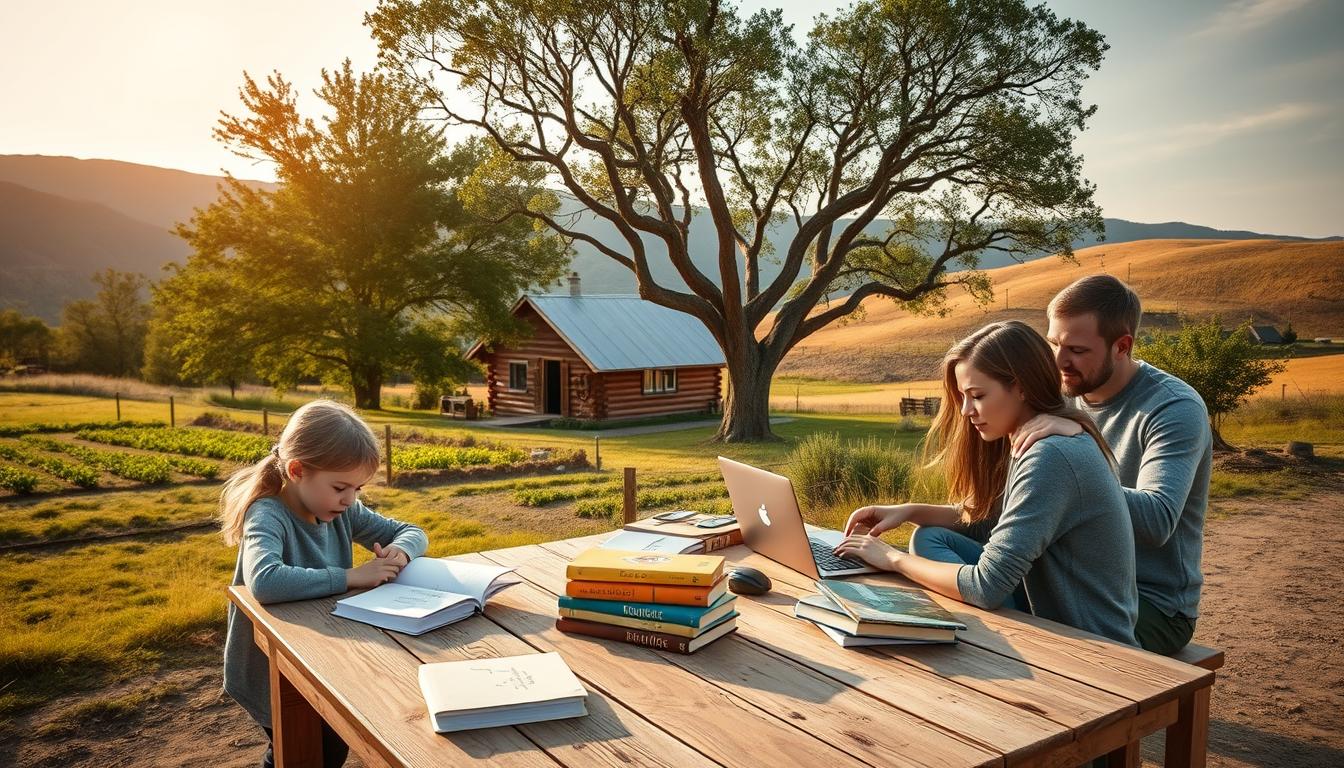
Off-grid families have special challenges with school and work. They live far from usual places, so they need new ways to homeschool and work from home. Sarita Harbour, who wrote “How to homeschool and work from home… Wondering whether it’s possible? It is,” says finding answers is key for their happiness.
Thank you for reading this post, don't forget to subscribe!This article will look at how off-grid families manage school and work. We’ll share real stories and advice from experts. This will give you a peek into off-grid living.
Key Takeaways
- Understanding the challenges faced by off-grid families in managing education and employment.
- Exploring innovative approaches to homeschooling and working from home.
- Strategies for balancing school and work in off-grid settings.
- Insights from experts and real-life examples of successful off-grid families.
- Practical advice for families considering an off-grid lifestyle.
The Reality of Off-Grid Family Life
Living off the grid is both challenging and rewarding for families. It changes daily life a lot. This affects education and household chores.
Defining the Off-Grid Lifestyle
The off-grid lifestyle means being self-sufficient and not relying on public utilities. Families make their own energy, collect rainwater, and grow food.
Common Motivations for Choosing Off-Grid Living
Many families choose off-grid living for a simpler life, caring for the environment, and wanting independence. Megen Hibbins says it’s a chance for personal growth and bonding.
Transitioning from Conventional to Off-Grid Family Life
Switching to off-grid living is tough. Families must get used to less connectivity and learn new skills.
Initial Adjustments and Challenges
Some early hurdles include:
- Getting used to new energy sources
- Handling water collection and saving
- Creating a new daily routine
Setting Realistic Expectations
It’s key to have realistic goals when going off-grid. Knowing the challenges helps a lot. For more on homeschooling challenges, check out The Canadian Homeschooler.
Education Options for Off-Grid Children
Off-grid families have unique challenges in educating their kids. They need creative ways to learn because of isolation and limited school access. Parents must be creative and resourceful to give their kids a good education.
Homeschooling Approaches and Curriculum Choices
Homeschooling is a great choice for many off-grid families. It lets them tailor education to each child’s needs and interests. Personalized learning is a big plus, allowing parents to adjust the curriculum to fit their child’s learning style.
Some families choose a structured homeschooling program. Others prefer a more flexible, eclectic approach. The goal is to find a balance that keeps kids engaged and motivated. Resources like The Homeschool Mom offer helpful tips on balancing homeschooling with other duties.
Distance Learning and Online Education Resources
For off-grid families with reliable internet, online learning can be a great addition. Online courses and virtual classrooms let kids connect with teachers and peers beyond their community. But, internet reliability is a big challenge, so having backup plans and offline resources is key.
Legal Requirements and State Regulations
Off-grid families need to know the legal requirements and state regulations for homeschooling. Laws vary a lot from state to state. It’s important for parents to learn about the specific laws in their state to follow them.
Compliance Strategies for Different States
To follow state regulations, off-grid families can use different strategies. They can keep detailed records of their kids’ progress, join state-approved assessment programs, or use a homeschooling umbrella organization for legal and administrative tasks.
Record-Keeping Best Practices
Keeping good records is key for compliance and tracking a child’s progress. It’s best to maintain a portfolio of work samples, log educational activities, and document assessments or evaluations.
Technology Solutions for Limited Connectivity
For off-grid families with connectivity issues, technology can help. Offline learning resources, like downloaded content and apps that work without internet, are very useful.
Offline Learning Resources
Offline resources include educational software, textbooks, and printed materials. These can provide a full education even without internet.
Low-Power Educational Tools
Low-power tools, like solar-powered tablets and e-readers, are great for off-grid families. They let kids access educational content while using less energy.

How Off Grid Families Handle School and Work Daily
Off-grid families plan school and work carefully. Living off the grid means being flexible with education and jobs.
Creating Sustainable Daily Routines
Off-grid families need a daily routine. It balances homeschooling, chores, and work. A good routine keeps everyone productive and normal.
Seasonal Adjustments to Learning Schedules
Seasons change, so learning schedules must too. In harvest times, more farm work means flexible homeschooling. This flexibility keeps education and work in balance.
Integrating Practical Skills with Academic Learning
Off-grid living mixes practical skills with school. Kids learn science through farming and math with family budgets.
Hands-On Learning Through Homestead Activities
Homestead activities teach kids a lot. They learn gardening, animal care, and food preservation. These skills help the family.
Documentation for Academic Credit
Off-grid families document their kids’ learning. This includes portfolios of their work and achievements. It’s useful for school later.
Adapting Education as Children Grow Older
Children’s education needs change as they grow. Off-grid families must adjust their teaching to meet these needs. This prepares kids for the future.
Middle and High School Considerations
Older kids need more specialized education. Off-grid families use online resources and apps. They also connect with communities for a full education.
Preparing for College or Vocational Paths
Getting ready for college or vocational paths is more than just school. Off-grid living teaches independence and problem-solving. These skills are key for success.
Off-grid families use a flexible approach to education and work. This creates a fulfilling life for everyone.
Employment and Income Solutions for Off-Grid Parents
Off-grid parents face unique challenges in balancing work and family life. They need innovative ways to earn money. The off-grid lifestyle requires self-sufficiency and adaptability to secure a stable income.
Remote Work Opportunities Compatible with Off-Grid Living
Remote work is a good option for off-grid parents. It lets them use their skills in a flexible way. With digital technologies, many remote work opportunities are available.
Platforms like Upwork and Freelancer offer jobs that can be done from anywhere. You just need a reliable internet connection.
Self-Employment and Entrepreneurship Models
Off-grid parents can also try self-employment and entrepreneurship. They can find niche markets or create unique products. For example, making handmade goods or artisanal foods can be sold online or at local markets.
This can provide a steady income. As articles about blending home and school show, it’s beneficial to mix work and education.
Managing Connectivity Challenges for Work
Managing connectivity is a big challenge for off-grid families. Reliable internet access is key, but it’s often hard to find in rural or remote areas.
Alternative Power Solutions for Digital Work
Off-grid families can use alternative power solutions like solar panels or wind turbines. These systems help generate their own energy. This keeps digital devices powered.
Scheduling Work Around Energy Availability
Another strategy is to schedule work when energy is available. Doing tasks during peak energy times can boost productivity.
Income Diversification Strategies
Having multiple income sources is important for off-grid families. It helps them stay financially stable. This way, they can avoid risks from relying on one income source.
Seasonal Employment Options
Seasonal jobs can add extra income during busy times. For example, families near tourist spots can offer services or products for visitors.
Product-Based vs. Service-Based Businesses
Choosing between product-based and service-based businesses depends on the family’s skills and resources. Product-based businesses might involve making goods. Service-based businesses could include consulting or teaching.
Community and Support Networks
For off-grid families, having a community is key. It helps them face the ups and downs of sustainable living off grid. These groups offer a safety net, resources, and connections that are vital.
Connecting with Other Off-Grid Families
Being part of an off-grid community lets families meet others like them. They can find each other through online forums, local meetups, and events. For example, visiting off-grid living resources can offer valuable insights and connections.
Resource Sharing and Co-Learning Opportunities
Off-grid families can share tools, skills, and educational materials. This helps a lot. Some common ways include:
- Tool sharing libraries
- Skill swap programs
- Cooperative childcare
Leveraging Community Skills for Education and Income
By using community skills, families can improve their kids’ education and earn more. For example, a community might hold workshops or classes on sustainable living.
Building Relationships with Local Communities
It’s important for off-grid families to connect with local communities. They should join local events, help with projects, and talk openly.
Access to Additional Resources
Being in a community gives off grid families more resources. This includes knowledge, tools, and money.
Creating Safety Nets for Emergencies
A strong community can be a safety net in emergencies. It provides support and help when needed.

Conclusion: Balancing Freedom and Responsibility in Off-Grid Family Life
Off-grid families have to balance freedom with big responsibilities. They need to make sure kids get a good education and earn money. Homeschooling and using online resources are key to this.
These families show they can adapt and be strong. They make daily routines that work, mix practical skills with learning, and find jobs that can be done from home. This way, they can do well.
Choosing the off-grid life is both rewarding and hard. It shows the hard work and commitment needed to live this way. It also brings personal growth and helps protect the environment.
FAQ
What are the most common challenges faced by off-grid families when it comes to education?
Off-grid families face many challenges. They often have limited access to education. They also deal with connectivity issues and need to adapt their learning to fit their lifestyle.
How do off-grid families handle homeschooling regulations and state laws?
Off-grid families must learn about their state’s homeschooling laws. These laws can change a lot. They need to keep records, submit reports, and follow certain curriculum rules.
What are some effective ways for off-grid families to integrate practical skills with academic learning?
Off-grid families can learn through hands-on activities. They can garden, care for animals, and do DIY projects. These activities help teach math, science, and language arts.
How do off-grid parents manage remote work and employment opportunities?
Off-grid parents can find remote jobs like freelancing or online tutoring. They can also start their own businesses. They need to deal with internet issues and work around when they have power.
What are some strategies for off-grid families to build a support network and connect with other like-minded families?
Off-grid families can join online forums and social media groups. They can also meet up with other families. Sharing resources and building local connections helps them find support and access more resources.
How do off-grid families prepare their children for college or vocational paths?
As kids get older, off-grid families adjust their education. They focus on getting ready for college or vocational training. This might include standardized tests, online classes, or vocational programs.
What are some income diversification strategies for off-grid families?
Off-grid families can find different ways to make money. They can work seasonally, start a product business, or offer services. This helps them not rely on just one income and makes them more financially stable.
How do off-grid families manage their daily routines and schedules?
Off-grid families make sustainable routines by setting priorities and managing energy. They adjust their schedules with the seasons. They also mix practical skills with learning for a well-rounded education.

Subscribe to Our Newsletter