Camping on public land is a great way to enjoy nature. But, it’s important to know the legal camping time. This helps avoid fines and keeps nature safe for others.
Thank you for reading this post, don't forget to subscribe!The rules for camping duration on public land change a lot. Different places like BLM lands, National Forests, and National Parks have their own rules.
It’s key to know the rules for where you’re going. For more info, check out rules for camping on public land.
Key Takeaways
- Understand the specific camping regulations for the public land you plan to visit.
- Camping duration limits vary across different types of public lands.
- Familiarize yourself with the rules for BLM lands, National Forests, US Fish & Wildlife Service lands, and National Parks.
- Check for any required permits or seasonal restrictions.
- Plan ahead to ensure a sustainable and enjoyable camping experience.
Understanding Public Land Categories in the US
Public land in the US is varied, from national forests to wildlife refuges. Each has its own camping rules. It’s key for campers to know these rules to enjoy their time outdoors legally.
National Forest Service Lands
National Forest Service Lands provide lots of camping spots. The US Forest Service manages these areas. They let you camp for up to 14 days in a 28-day period.
Here, you can have a simple camping experience. But, you must follow the rules to protect the environment.
Bureau of Land Management (BLM) Areas
The Bureau of Land Management oversees millions of acres of land. These areas often have less strict camping rules than national parks. You can usually camp for up to 14 days, and sometimes longer in special cases.
National Parks and Monuments
National Parks and Monuments have strict rules. Some allow backcountry camping with a permit. Others have specific campsites with strict rules.
Campers must follow these rules to keep these places safe.
State Parks and Recreation Areas
State Parks and Recreation Areas have their own rules. These rules can vary a lot from state to state. Some let you stay longer, while others have strict limits.
It’s important to check with local park authorities for the exact rules.
Wildlife Refuges and Other Federal Lands
Wildlife Refuges and other federal lands have limited access. This is to protect sensitive habitats. Camping might be limited or not allowed at all to keep wildlife safe.
Key Considerations:
- Always check the specific regulations for the type of public land you plan to camp on.
- Understand the duration limits and any necessary permits.
- Be mindful of environmental protections and restrictions.
How Long You Can Camp on Public Land Legally: Standard Duration Limits
Knowing the legal limit for camping on public land is key for a good camping trip. The time you can camp varies a lot. It depends on the area and type of public land.
The 14-Day Rule on Most Federal Lands
Most federal lands have a 14-day camping limit in 28 days. This rule is for lands managed by the Bureau of Land Management (BLM) and some National Forest Service areas. For more on this, check The Boondockers Bible.

Dispersed vs. Developed Campground Limits
Dispersed camping usually has a 14-day limit. But, developed campgrounds might let you stay longer or need a reservation.
National Park Camping Limitations
National Parks have strict camping rules. Some parks limit stays to 7 days or less in peak season. Always check the park’s rules before you go.
State-by-State Variations
Camping rules change by state and land type. Some states are more relaxed, while others are stricter. For example, Nevada BLM areas might let you stay longer than California’s.
Seasonal Restrictions and Closures
Seasonal rules and closures also play a part. Areas might close for weather, maintenance, or wildlife reasons. Always check for any seasonal restrictions before you go.
By knowing these rules, campers can enjoy public land legally and safely.
Extended Stay Options and Permit Systems
Public land offers extended stay options through various permit systems and areas. Campers can enjoy longer stays by using these options. They help manage visitors and protect the environment.
Long-Term Visitor Areas (LTVAs)
Long-Term Visitor Areas (LTVAs) are managed by the Bureau of Land Management (BLM). They offer extended stay options for campers. LTVAs have amenities like waste disposal, potable water, and recreational activities.
To stay in an LTVA, campers must follow guidelines and pay fees. This includes registration and payment.
Special Recreation Permits
Special Recreation Permits allow for extended stays on public land. They are for activities or events needing more time. To get a permit, you must submit a detailed plan.
This plan should include how you’ll affect the environment and how to reduce harm.
Winter Camping Regulations
Winter camping rules change based on the land type. Some places have special rules for weather, wildlife, or maintenance. Check with the land agency for the latest info.
Campground Host Opportunities
Being a campground host is a great way to stay longer. Hosts help other campers and do maintenance. They might also teach educational programs.
In return, hosts get free or cheap camping. It’s perfect for those who love the outdoors and want to help.
Moving Between Sites: The 25-Mile Rule
The 25-Mile Rule lets campers move up to 25 miles between sites. This rule stops overuse and lets camping spread out. Remember this rule and plan your moves to follow camping rules on public land.
Knowing about these options and rules is key for a good camping trip. By using LTVAs, Special Recreation Permits, and more, campers can enjoy longer stays. They can do this while respecting the land and its rules.
Legal Considerations and Responsible Camping
To camp on public land legally, you need to know the rules. Camping on public land has its perks and duties. Knowing these helps you have a good time.
How Camping Limits Are Enforced
Camping limits are checked by rangers, cameras, and visitors. Rangers and law enforcement officials watch campsites and areas to follow rules.
Different places have different ways to check camping rules. For example, some places watch more because they get more visitors.
Penalties for Overstaying
Staying too long can lead to fines and penalties. The fines can change based on where you are and the rules there.
Breaking the rules a lot can mean losing your camping stuff or even getting arrested. Knowing this helps you stay out of trouble.
Documentation and Proof of Compliance
It’s important to keep your camping papers in order. This includes receipts from campsite fees, permits, and other important documents.
Having these papers ready can help solve problems with law enforcement or land managers.
Leave No Trace Principles
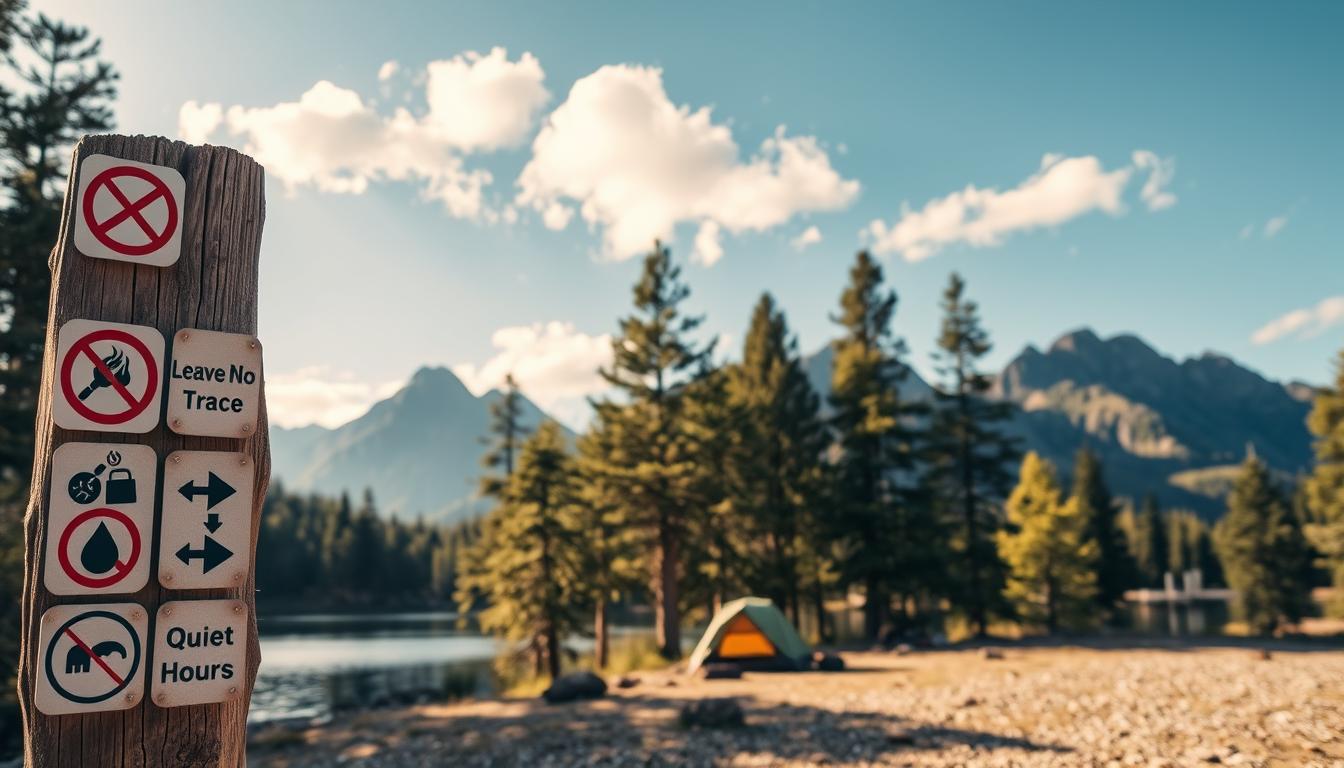
Responsible camping means following Leave No Trace principles. These help keep the environment clean. They include throwing away trash right, not disturbing animals, and not making too much mess with fires.

By doing this, we help keep public lands beautiful for others to enjoy in the future.
Planning Ahead for Legal Compliance
Before you go, research the rules of where you’re going. Know the camping time limits, if you need permits, and any special rules.
Planning helps you follow the law and makes your camping trip safer and more fun.
[link-whisper-related-posts]Conclusion
Camping duration on public land changes a lot. It depends on the type of land and where you are. Knowing public land camping duration laws is key for a good camping trip.
Public lands like National Forest Service Lands and State Parks have their own rules. The 14-day rule is common on federal lands, but it can differ. Always check the local rules to avoid fines.
It’s important to know the rules of your camping spot. This includes knowing the difference between dispersed and developed campsites. Also, be aware of seasonal limits and if you need a permit.
Following public land camping rules helps protect nature. It also keeps public lands open for others to enjoy in the future.
FAQ
What is the general rule for camping duration on public land?
Most federal lands, like National Forest Service Lands and BLM Areas, have a 14-day rule. This lets campers stay up to 14 days in a 28-day period.
Are there differences in camping regulations between dispersed and developed campgrounds?
Yes, there are differences. Dispersed camping has looser rules and no time limit. Developed campgrounds have strict rules, like specific stay times and reservations.
How do camping regulations vary in National Parks compared to other public lands?
National Parks have stricter camping rules than National Forest Service Lands and BLM Areas. Camping is often only allowed in designated sites. Stay times can be as short as 7 days.
Can I extend my camping stay on public land, and if so, how?
Yes, you can extend your stay. Look into Long-Term Visitor Areas (LTVAs) or get Special Recreation Permits. You can also be a campground host. Rules vary by location and land type.
What happens if I overstay the allowed camping duration on public land?
Overstaying can lead to fines. Rangers and land managers check campsites. Always follow rules and have proof of your stay within limits.
How can I ensure I’m camping legally and responsibly on public land?
To camp legally and responsibly, know the rules for the public land you’re visiting. Follow Leave No Trace principles and plan ahead. Be ready to show proof of your stay within limits.
Are there seasonal restrictions or closures I should be aware of when planning to camp on public land?
Yes, many public lands have seasonal restrictions or closures. These can be due to weather, wildlife protection, or maintenance. Always check with the managing agency before you go.
Can I move between campsites, and are there any specific rules I should know?
Moving between campsites is allowed in some areas. But, there are rules, like the 25-mile rule. This rule prevents camping within 25 miles of your last site in a certain time. Check local regulations for details.

Subscribe to Our Newsletter