The United States has many different landscapes and places to enjoy the outdoors. But, the rules for camping regulations change a lot from state to state.
Thank you for reading this post, don't forget to subscribe!People who love to camp and enjoy the outdoors need to know the state-specific camping laws and camping rules by state. This helps them have a safe and fun time.
Dispersed camping, which means camping on public land not in campsites, has its own rules. These rules also change by state. It’s very important to know these laws before you go camping.
Key Takeaways
- Camping regulations vary significantly across the United States.
- State-specific camping laws govern both public and private lands.
- Dispersed camping is subject to unique regulations.
- Understanding camping rules is key for a safe and enjoyable experience.
- Campers must research and follow local regulations.
Understanding the Landscape of Camping Regulations
Camping rules vary a lot. They depend on federal, state, and local laws. It’s important to know the legal camping requirements where you plan to camp.
Federal vs. State vs. Local Jurisdiction
Managing camping rules is complex. Federal agencies like the Bureau of Land Management (BLM) oversee public lands. They have rules for camping, like needing permits and paying fees.
State laws also matter a lot. They focus on keeping the environment safe and protecting public safety.
The Legal Framework for Outdoor Recreation
The laws for outdoor fun are many and varied. They cover how we can use public and private lands for camping. Key parts include:
- Permitting systems to manage camper numbers
- Environmental regulations to protect natural resources
- Public safety laws to ensure camper well-being
Knowing camping legislation by state helps you follow the rules. This way, you can have a safe and enjoyable camping trip.
How Camping Laws Differ by State: A Comprehensive Overview
Camping laws change a lot from state to state. This is because of different environments and what people like to do outdoors. Each state has its own rules because of these reasons.
Key Factors Influencing State Camping Legislation
Many things shape camping laws in each state. For example, places like California have strict rules to keep nature safe. On the other hand, states with lots of land, like Colorado and Utah, try to find a balance between fun and protecting the environment. The Manitoba camping regulations show that other areas think the same way.
Key factors include:
- Environmental concerns: Protecting animals and nature.
- Public safety: Keeping campers safe with rules on fires, trash, and more.
- Recreational needs: Finding a good balance between letting people camp and keeping places nice.
Common Elements in State Camping Regulations
Even though camping laws vary, there are some things most states agree on. These include:
- Permits: Many states need campers to get permits, mainly in busy or special places.
- Fees: Camping fees are common, and the money helps keep places nice and safe.
- Stay limits: Rules often say how long you can camp in one spot.
These rules help keep the outdoors safe for everyone to enjoy for years to come.
Regional Breakdown of Camping Laws
Camping laws change a lot from one place to another. This is because each area has its own environment, culture, and laws. Knowing these differences is key to camping safely and legally.
Public Land and Regulations in Western States
The West has lots of public land. Agencies like the Bureau of Land Management (BLM) and the U.S. Forest Service (USFS) manage it. These places offer many camping spots, but there are rules to follow.
California, Colorado, and Utah have their own camping rules. California is very careful about fires. Colorado likes dispersed camping. Utah has big public lands and special camping rules.
California, Colorado, and Utah: Notable Differences
These states manage public lands in their own way. They all want to protect nature while letting people enjoy it. California worries about fires, Colorado likes to camp freely, and Utah keeps its lands beautiful.
Private Land and Access Considerations in Eastern States
The East has more private land, making camping harder to find. States like New York, Maine, and Vermont handle camping differently on public and private lands.
New York, Maine, and Vermont: Key Regulations
These states have rules for their dense forests and changing seasons. New York has rules for state parks. Maine needs permits for some places. Vermont protects its nature.
Seasonal Restrictions and Wildlife Management in Southern States
The South has its own challenges with climate and wildlife. States here have seasonal restrictions to keep everyone safe. There are rules about campfires and food storage to avoid wildlife problems.

Camping in the South is safe and fun because of these rules. They help deal with the hot summers and mild winters.
Essential Camping Permit and Reservation Requirements
To enjoy camping without legal issues, it’s key to know the permit and reservation rules. Camping laws differ a lot from state to state. So, it’s important to learn the legal rules before you go camping.
Mandatory Camping Permits by State
Many states need camping permits to control visitor numbers and protect nature. For example, California and New York have special rules for permits in some areas. Always check with local park rangers or state websites for the latest on permits.
Reservation Systems and Timeframes
Reservation systems are also key in camping rules. States set different times for making reservations, from a few days to months ahead. For example, popular spots in national parks often need reservations early, even months before. You can find more info on reservations at the National Park Service website.
Fee Structures and Exemptions
Fees for camping permits and reservations vary a lot. Some states have free or reduced fees for seniors or disabled veterans. Knowing these fees and any free passes can help plan your trip better.
https://www.youtube.com/watch?v=BU-rnRcPSAk
| State | Permit Requirement | Reservation System |
|---|---|---|
| California | Yes | Up to 6 months in advance |
| New York | Yes | Up to 9 months in advance |
| Florida | No | First-come, first-served |
Knowing the camping permit and reservation rules helps ensure a great outdoor adventure. Always check the latest rules before planning your camping trip.
Critical State-Specific Regulations
Camping rules vary across the United States. It’s important to know the laws in each state. This helps avoid fines and keeps the environment safe.
Campfire Regulations and Fire Bans
Campfire rules and fire bans are key in camping laws. States with wildfire risks have strict campfire rules. For example, California bans fires when danger is high. Texas has rules for keeping campfires contained, as seen in the Texas Administrative Code.

Food Storage and Wildlife Protection Laws
States like California and Colorado have strict food storage rules. These rules help keep bears and wildlife away. Campers must use bear-proof containers or hang food and trash bags.
Waste Disposal and Environmental Protection Rules
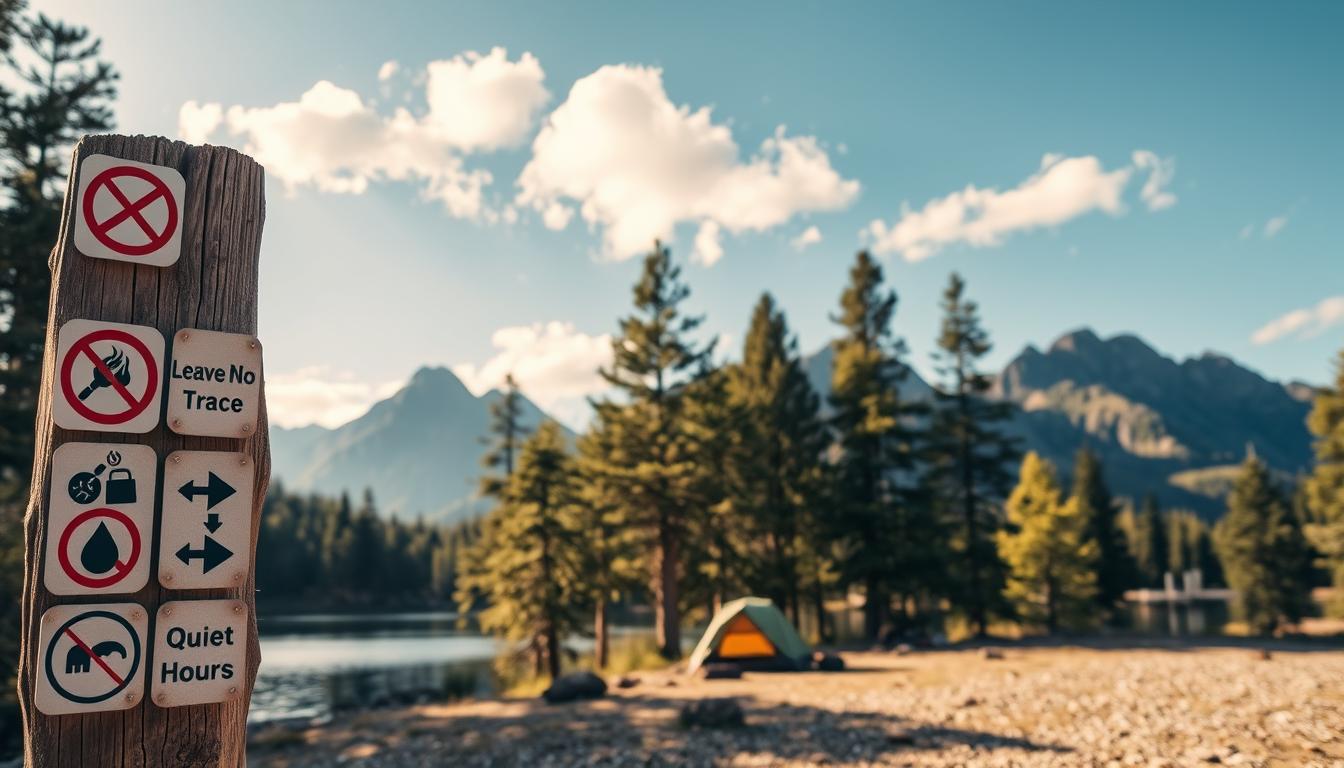
Rules for waste disposal keep camping areas beautiful. States have rules for human waste, gray water, and trash. Some require portable toilets or specific waste facilities. Others ask campers to leave nothing behind but bubbles.
Length-of-Stay Limitations and Enforcement
States have different rules for how long you can camp. These rules help keep areas available for others. Knowing these rules is key to avoid fines and have a good camping trip.
Learning about these regulations helps campers enjoy nature safely. It’s important for both new and experienced campers to know camping rules by state and camping legislation by state.
[link-whisper-related-posts]Conclusion: Navigating the Patchwork of State Camping Laws
Understanding state camping laws is key. Each state has its own rules for camping. These rules help manage public lands, protect wildlife, and keep campers safe.
State camping rules can change based on environmental needs, land use, and local laws. Knowing these rules is important for a good camping trip.
Learning about the camping laws in your state helps you avoid fines. It also helps protect nature. Websites, outdoor groups, and government sites offer great info to guide you.
FAQ
What is dispersed camping, and how is it regulated?
Dispersed camping means camping on public land not in campsites. Rules change by state and place. Some places need permits or follow certain rules.
How do federal, state, and local laws intersect when it comes to camping regulations?
Federal laws cover public lands. State laws manage camping in their areas. Local laws also apply, mainly for environmental or cultural reasons.
What role does the Bureau of Land Management (BLM) play in managing public lands for camping?
The BLM oversees public lands and has camping rules. These include permits, fees, and how long you can stay. Following these rules helps avoid fines and protects nature.
What are some common elements found in state camping regulations?
States often have rules on permits, fees, and how long you can stay. There are also rules on campfires and waste. Each state is different, so it’s key to know the local laws.
How do camping laws differ in western, eastern, and southern states?
Western states have lots of public land with rules on camping and stay limits. Eastern states deal with more private land. Southern states have rules for seasons and wildlife.
What are some examples of state-specific camping regulations?
California, Colorado, and Utah have their own rules. These include permits, campfire rules, and stay limits. Knowing these rules helps avoid fines.
Are camping permits always required, and how do reservation systems work?
Some states need camping permits, others don’t. Reservation systems differ too. Some are online, others by phone or in person.
What are the typical fee structures for camping, and are there any exemptions?
Fees vary by state, like per person or per night. Some groups, like seniors or the disabled, might get a break.
How can campers ensure they are complying with state-specific regulations, such as campfire restrictions and waste disposal guidelines?
Research local rules and check state park websites or visitor centers. Following guidelines helps avoid fines and protects nature.
What are the consequences of not following state camping laws and regulations?
Breaking camping laws can lead to fines, penalties, and even arrest. It can also harm the environment and local ecosystems.
Where can campers find more information on state-specific camping laws and regulations?
Visit state park websites, contact visitor centers, or talk to outdoor groups. They can help with state camping laws and regulations.

Subscribe to Our Newsletter