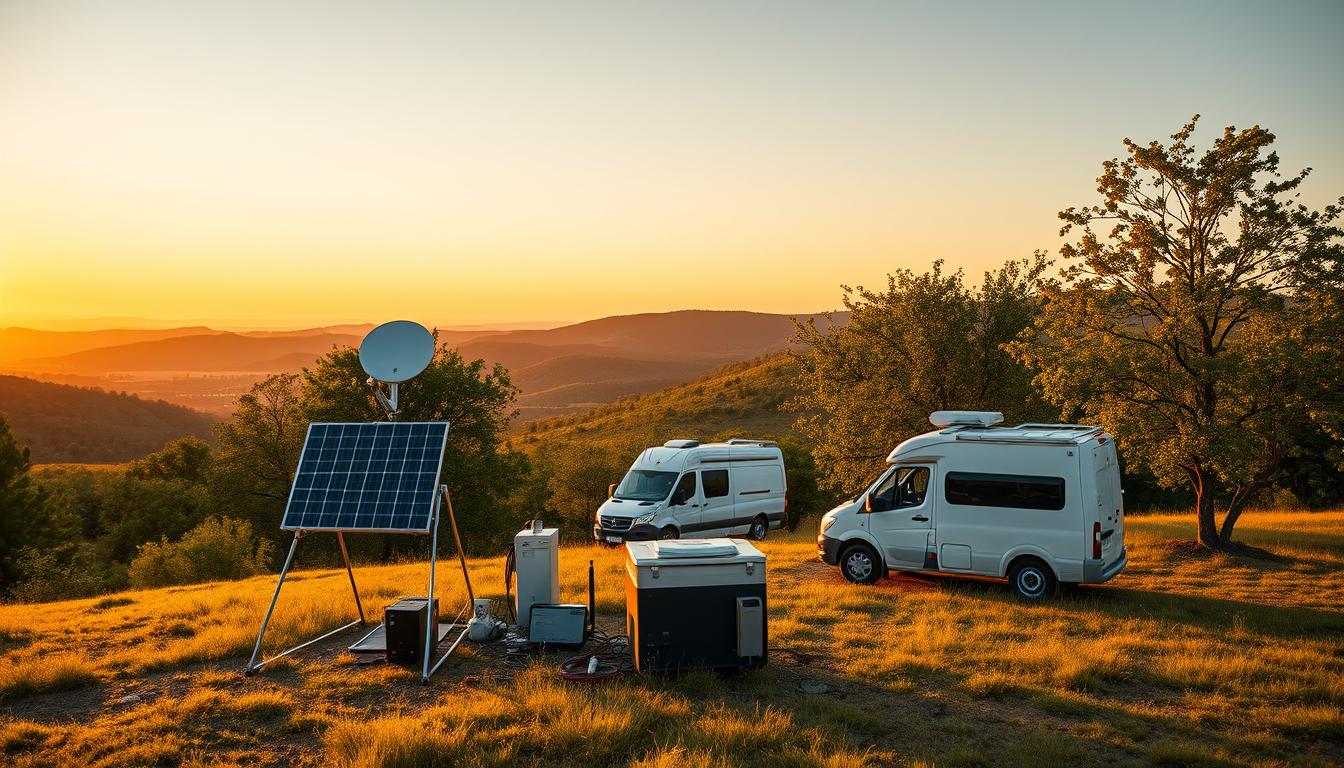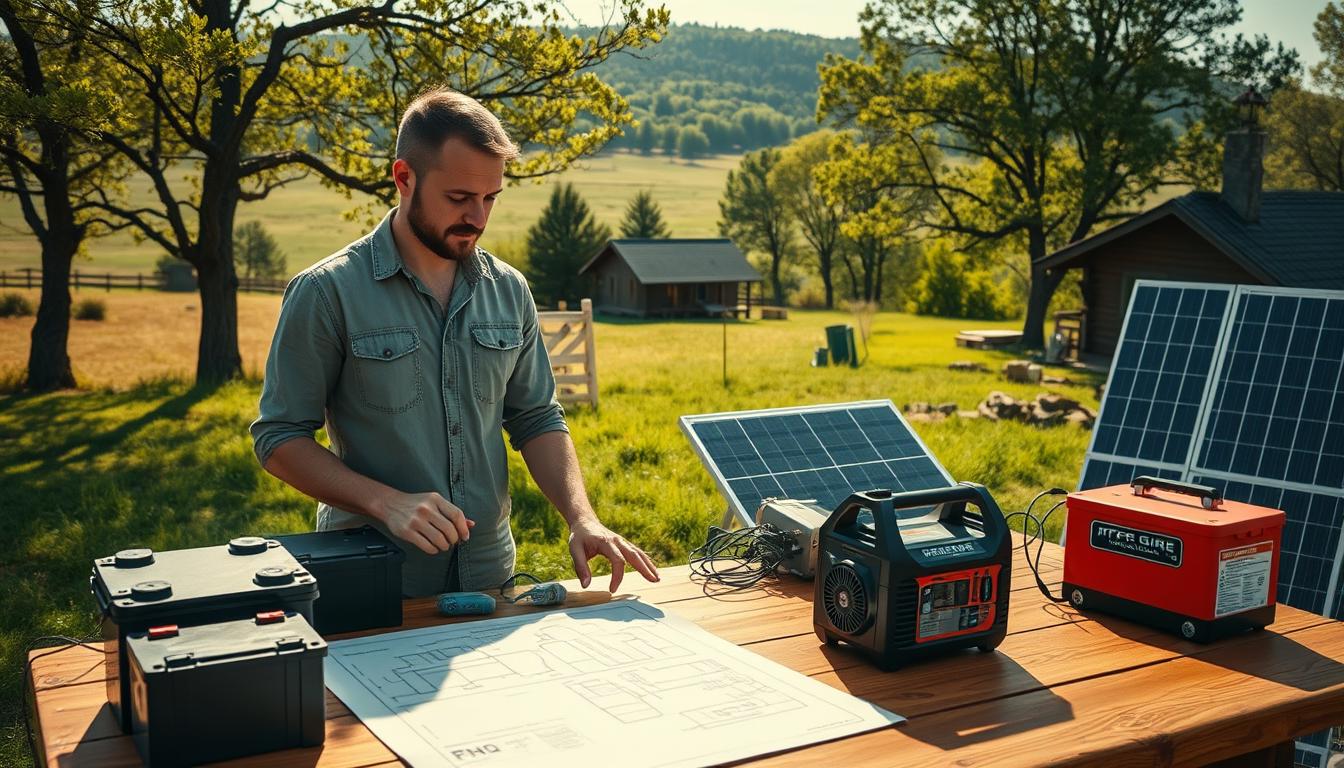
Off-grid electricity is getting more popular. It’s not just for rural homesteaders or survivalists anymore. People using cabins, trailers, or mobile offices also find it useful. Knowing how to plan for off-grid generator planning is key for those who depend on it.
Thank you for reading this post, don't forget to subscribe!First, you need to figure out how much power you need. This means adding up the watts of all your appliances. You also have to think about how much power you use every day and how it changes with the seasons. For more help, check out off-grid generator guides. They offer great tips on using sustainable energy.
Key Takeaways
- Assess your total power requirements to determine the right off-grid generator size.
- Consider daily and seasonal variations in energy demand.
- Explore different types of off-grid power systems, including solar, fuel-based, and hybrid systems.
- Understand the importance of fuel planning and storage for off-grid generators.
- Look for generators with features like quiet operation, expandable batteries, and multiple outputs.
Understanding Off-Grid Power Generation Needs
Knowing your off-grid power needs is key for a green and independent life. First, you must figure out how much power you need.
Assessing Your Power Requirements
Figuring out your power needs means looking at how much energy you use. You need to know what’s really important and what’s not.
Essential vs. Non-Essential Loads
Essential loads are things like lights, medical gear, and phones. Non-essential loads are things like washing machines and TVs. Knowing what’s essential helps you figure out the minimum power you need.
Calculating Wattage Requirements
To find your total wattage needs, add up the power each appliance uses to run and start. For example, a fridge uses 100W to run but 300W to start. For more info on off-grid power, check out https://www.ecoflow.com/ca/blog/what-is-off-grid-power-system.
| Appliance | Running Wattage (W) | Surge Wattage (W) |
|---|---|---|
| Refrigerator | 100 | 300 |
| LED Lighting | 10 | 10 |
| Communication Device | 20 | 20 |
To make your off-grid life better, use energy-saving tips. Add insulation, use LED lights, and get smart thermostats. These steps cut down your power use and boost your energy freedom.
Types of Generators for Off-Grid Living
Off-grid generator planning is about knowing the different types of generators. These are key for a reliable power supply when living off the grid.
Portable vs. Standby Generators
Generators for off-grid living are mainly portable or standby. Portable generators are easy to move. Standby generators stay in one place and start automatically when power goes out.
Size and Power Output Considerations
Choosing a generator means looking at size and power. It must meet the power needs of your off-grid setup.
Installation Requirements
Installation needs differ for portable and standby generators. Standby generators need a pro to install, including fuel and automatic switch setup.
Fuel Options: Gasoline, Diesel, Propane, and Natural Gas
Generators can run on different fuels like gasoline, diesel, propane, and natural gas. Each has its own good and bad points.
Pros and Cons of Each Fuel Type
| Fuel Type | Pros | Cons |
|---|---|---|
| Diesel | Reliable, high energy density | Noise, higher upfront cost |
| Gasoline | Widely available, lower upfront cost | Lower energy density, higher maintenance |
| Propane | Clean-burning, long shelf life | Limited availability, special storage needed |
| Natural Gas | Convenient, potentially lower cost | Needs gas line, supply can be limited |

Choosing the right generator is about weighing these factors. This ensures a sustainable energy solution for off-grid living.
Effective Generator Use and Fuel Planning Off Grid
Using a generator well and planning fuel are key for off-grid power. It’s not just about running the generator. It’s about balancing energy use and fuel.
Establishing Operating Schedules
Creating an operating schedule is vital. It helps decide when to run the generator based on energy needs.
Run Time Optimization
- Watch energy use to find when it’s highest.
- Run the generator at these times for best efficiency.
- Think about using systems that start and stop the generator for you.
Load Management Strategies
Managing loads well is important for generator efficiency. It means focusing on important loads and cutting back on others when needed.
Priority Load Circuits
- Find out which appliances and systems must always have power.
- Set up special circuits for these important loads.
- Use controllers to turn off non-essential loads automatically.
Fuel Storage Requirements
Storing fuel right is essential for off-grid power. It’s about planning for both immediate and future fuel needs.
Short-Term vs. Long-Term Planning
- Check if your current fuel storage meets short-term needs.
- Plan for long-term fuel storage, thinking about fuel type, storage, and safety rules.
- Use a fuel rotation plan to use older fuel before it goes bad.
By using these strategies, off-grid system owners can make their generators more fuel-efficient. This reduces costs and makes the system more reliable.
Fuel Efficiency and Consumption Calculations
Knowing how much fuel your generator uses is very important. It helps you plan better and save money. This way, your off-grid power is both efficient and affordable.
Understanding Generator Fuel Consumption Rates
How much fuel a generator uses depends on its size, type, and how hard it’s working. Reading manufacturer specifications is key to knowing these rates.
Reading Manufacturer Specifications
Manufacturers give fuel use data for different loads. This data helps you figure out how much fuel you’ll need under different conditions.
Estimating Fuel Needs for Different Timeframes
To plan fuel storage well, you need to estimate fuel needs for daily, weekly, and monthly use.
Daily, Weekly, and Monthly Projections
- Daily projections help manage short-term fuel storage and costs.
- Weekly and monthly projections help plan fuel deliveries and long-term storage.
Strategies for Maximizing Fuel Efficiency
To use fuel better, focus on load matching and proper generator sizing. Having a generator that fits your energy needs can cut down fuel use a lot.
Load Matching and Generator Sizing
A generator that’s too big wastes fuel, while one that’s too small can’t meet your needs.
By using these strategies, you can make your generator work better. This will lower fuel costs and make your off-grid power more sustainable.
Safe Fuel Storage and Handling Practices
Keeping fuel safe is key to avoiding accidents and protecting the environment in off-grid areas. It’s important to handle and store fuel correctly. This is a big part of Off Grid Energy Management and Sustainable Energy Solutions.
Fuel Storage Regulations and Best Practices
Following fuel storage rules and best practices is very important. This means using the right containers and picking safe places to store them.
Container Types and Storage Locations
Fuel needs to be in containers made for its type. Storage spots should be open, far from homes, and follow local laws. For more on fuel options, check out https://mistersparkymyrtlebeachsc.com/fuel-for-your-generator/.
Fuel Stabilization and Rotation
Keeping fuel quality up is key. Using fuel first that’s been stored longest helps. This is called fuel rotation.
Shelf Life Considerations
Knowing how long fuel lasts is important. For example, gasoline doesn’t last as long as diesel or propane.
Environmental and Safety Considerations
When storing fuel, think about the environment and safety. It’s important to prevent spills and have plans to clean them up.
Spill Prevention and Containment
Using spill prevention tools like drip pans helps a lot. Having plans ready for spills also reduces risks to the environment.

Integrating Generators with Renewable Energy Systems
The future of off-grid power is in hybrid systems. These mix generators with solar and wind energy. This makes energy use better and greener, using less fuel and harming the environment less.
Generator-Solar Hybrid Systems
Generator-solar hybrids are a strong choice for off-grid power. They use a generator and solar panels. This way, they keep the power on, even when the sun isn’t shining.
Charge Controllers and System Design
Good system design is key for these hybrids. Charge controllers help manage energy flow. They make sure the system works well and efficiently.
Battery Storage Integration
Battery storage is vital in hybrid systems. It holds extra energy from solar panels or generators. This helps keep the power steady, even when energy demand changes.
Battery Types and Capacity Planning
Choosing the right battery type and size is important. Deep cycle batteries are best for long, steady power. They meet the energy needs of off-grid systems well.
Smart Load Management Systems
Smart load management systems are essential. They switch power sources automatically. This ensures the right amount of energy is always available.
Automatic Transfer Switches and Controls
Automatic transfer switches are important in these systems. They make switching between power sources smooth. Advanced controls adjust the system to use less fuel and work more efficiently.
Generator Maintenance for Reliable Off-Grid Power
To keep your off-grid generator working well, regular maintenance is key. It makes sure your generator gives you power when you need it.
Routine Maintenance Schedule
Having a good maintenance plan is important for your generator’s life and performance. You should do several important tasks:
- Regular oil changes to keep the engine lubricated
- Filter replacements to ensure clean fuel and air intake
- Spark plug maintenance for optimal engine performance
Oil Changes and Filter Replacements
Changing the oil regularly is essential for your generator’s engine. Change the oil every 50 to 100 hours, or as the maker says. Also, replace fuel and air filters often to avoid dirt and keep the engine running well.
Spark Plug and Air Filter Maintenance
Check and replace spark plugs as needed to keep your engine running right. A bad spark plug can make your generator less efficient. Clean or replace the air filter often to make sure your engine gets the clean air it needs.
Troubleshooting Common Issues
Even with regular care, problems can happen. Knowing how to fix common issues can save time and prevent bigger problems.
Starting Problems and Power Output Issues
If your generator won’t start, check the fuel, battery, and spark plugs. For power issues, look at the load and check for signs of overload or malfunction.
Winterization and Seasonal Considerations
If you live where it gets very cold, winterizing your generator is a must. Use the right oil for cold, protect it from snow and ice, and make sure it’s well-ventilated.
Cold Weather Operation Tips
Running your generator in the cold needs special care. Use cold-weather oil, keep it in a sheltered spot, and think about using a blanket or heater if it’s very cold.
By following these maintenance tips and being ready for the seasons, your off-grid generator will keep you powered all year.
[link-whisper-related-posts]Conclusion: Building a Sustainable Off-Grid Power Strategy
Creating a sustainable off-grid power plan means using generators with green energy. It also means being smart about energy use and keeping things running smoothly. By figuring out how much energy you need and picking the right systems, you can have a strong and green power setup.
It’s key to use generators wisely and plan fuel well for off-grid power. This means setting up schedules, managing how much energy you use, and storing fuel right. Adding Renewable Energy Solutions like solar and batteries makes your power system even better.
A good Off Grid Power Generation plan is good for the planet and gives you freedom from energy worries. With the right steps, you can have a steady and green energy supply. This follows the Sustainable Energy Solutions way.
FAQ
What is the first step in planning an off-grid generator system?
First, figure out how much power you need. This means adding up what all your appliances use. Also, think about how much power you use every day and season.
How do I distinguish between essential and non-essential loads for my off-grid generator?
Essential loads are things you really need, like lights, medical gear, and phones. Non-essential loads are things you can do without, like washing machines or TVs.
What are the key considerations when selecting a generator for off-grid living?
Look at the generator’s size and power. Also, think about how it’s installed and what fuel it uses. Gasoline, diesel, propane, and natural gas each have their own good and bad points.
How can I optimize generator use off-grid to balance energy demand with fuel efficiency?
Use load management to turn off non-essential things when you need more power. Make a schedule for when you use your generator to match your energy needs.
What are the best practices for fuel storage and handling to prevent accidents and environmental contamination?
Follow the rules for storing fuel. Use the right containers and keep them in safe places. Also, keep fuel fresh by rotating it and using stabilizers.
How can integrating generators with renewable energy systems enhance off-grid energy solutions?
Using generators with solar or wind power makes your system better. It uses different energy sources when they’re available and you need them.
What maintenance tasks are essential for ensuring reliable off-grid power generation?
Regular maintenance is key. Change oil, replace filters, check spark plugs, and fix common problems. Don’t forget to winterize your generator in cold weather.
How can I maximize fuel efficiency for my off-grid generator?
Know how much fuel your generator uses under different loads. Choose the right size and match your loads to the generator’s power.
What are the benefits of using a hybrid off-grid energy system?
Hybrid systems mix generators with solar or wind power. They’re reliable, efficient, and good for the environment.
How do I determine the right size and type of generator for my off-grid needs?
Calculate your total wattage needs. Consider both running and surge wattage. Pick a generator that fits your energy needs.

Subscribe to Our Newsletter