Creating a solid emergency food storage plan is key for off-grid homes. It means keeping lots of staples and preserving food at home. This way, your family can eat healthy meals all year.
Thank you for reading this post, don't forget to subscribe!A good off-grid pantry organization plan keeps food healthy and affordable. It also gets your family ready for surprises. With the right food storage, you can always have nutritious meals.
Key Takeaways
- Stocking bulk staples for long-term sustainability
- Implementing effective off-grid pantry organization techniques
- Preserving food at home for year-round availability
- Maintaining a consistent supply of healthy meals
- Preparing for emergencies with a reliable food storage system
The Unique Challenges of Off-Grid Food Storage
Living in off-grid homes means food storage is key to self-sufficiency. Off-grid living comes with special challenges for food storage and preservation.
Limited Electricity and Refrigeration Options
Electricity is scarce, limiting the use of modern fridges. This forces the use of alternative preservation methods like root cellars or non-electric coolers.
Seasonal Availability and Climate Considerations
Seasons and climate greatly affect off-grid food storage. Knowing these factors is vital for sustainable food storage solutions. The table below shows important considerations for different climates.
| Climate | Food Storage Considerations | Preservation Techniques |
|---|---|---|
| Cold | Root vegetables, canned goods | Freezing, canning |
| Hot | Dried goods, dehydrated foods | Dehydration, smoking |
| Temperate | Fresh produce, preserved meats | Curing, pickling |
By tackling these challenges with the right strategies, off-grid folks can keep a steady food supply. They use long-term food preservation methods.
Building an Effective Root Cell System
For long-term food stockpiling, a root cellar is key in off-grid living. It keeps fresh produce all year.
A good root cellar needs location, construction, temperature control, humidity management, and food selection. It should be underground or partly underground for natural insulation.
- Choose a location with good drainage to prevent water accumulation.
- Use materials like concrete, wood, or earth for construction to maintain a stable temperature.
- Implement temperature control measures, such as ventilation systems, to maintain a consistent temperature between 32°F and 40°F.
- Manage humidity levels between 80% and 90% to keep produce fresh.
Choosing the right foods is important. Root vegetables like carrots, beets, and potatoes are best for root cellars. They last long and are hardy.

With a well-designed and maintained root cellar, off-grid homes can have fresh, healthy food all year. This supports their long-term food goals.
Food Storage Ideas for Long-Term Off Grid Homes
Off-grid homes need smart food storage to live sustainably. Keeping your pantry organized is key to a good food storage system.
Pantry Organization Strategies
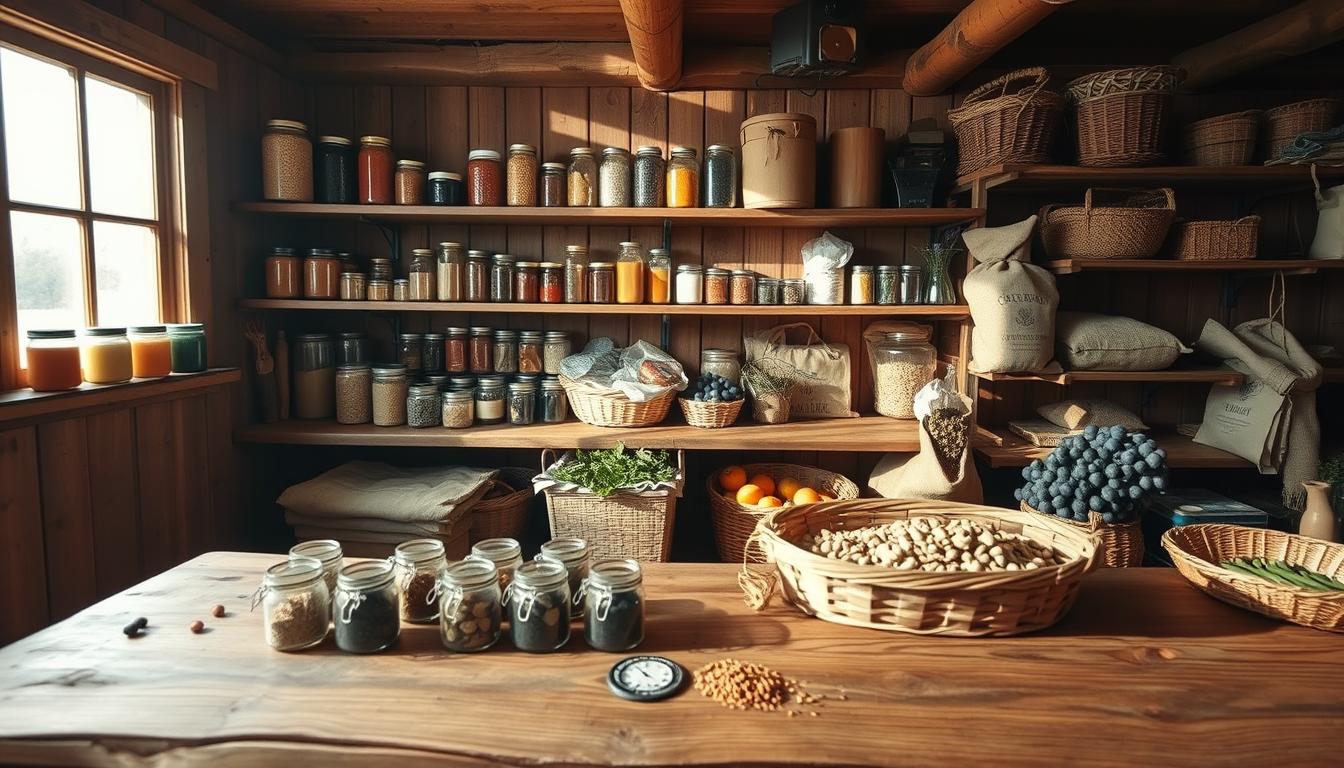
A tidy pantry is vital for storing food well. Categorizing food into groups like grains, canned goods, and baking supplies makes meal planning easier.
Space-Efficient Storage Solutions
It’s important to use space wisely in off-grid homes. Stackable containers and shelving units help make the most of pantry space.
| Storage Solution | Benefits | Space Efficiency |
|---|---|---|
| Stackable Containers | Easy to access, keeps food fresh | High |
| Shelving Units | Maximizes vertical space, customizable | High |
| Multi-Purpose Storage Areas | Versatile, can be used for various storage needs | Medium |
Multi-Purpose Storage Areas
Creating areas for multiple uses boosts off-grid homes. Under-bed storage or hidden compartments add space without taking up living area.
These food storage tips help off-grid homes stay organized and sustainable.
Preservation Techniques for Extended Shelf Life
Keeping food fresh is key for off-grid living. Many ways can make food last longer. This means you can eat well all year.
Water Bath and Pressure Canning Methods
Canning is a good way to keep food fresh. Water bath canning works for foods like fruits and pickles. But, you need pressure canning for foods like meats and veggies.
Dehydration and Smoking Processes
Dehydrating food stops bacteria from growing. Smoking does the same and adds a tasty flavor.
Fermentation and Pickling Approaches
Fermentation lets food break down naturally. This makes it last longer. Pickling uses vinegar or brine to preserve food.
Freeze-Drying Considerations
Freeze-drying keeps food’s nutrients and texture. It needs special gear but food stays good for a long time.
| Preservation Method | Description | Shelf Life |
|---|---|---|
| Canning | Sealing food in airtight containers | 1-5 years |
| Dehydrating | Removing moisture from food | 6-12 months |
| Smoking | Dehydrating and flavoring with smoke | 6-12 months |
| Fermenting/Pickling | Allowing natural breakdown or using brine/vinegar | Several months to years |
| Freeze-Drying | Removing water content through freezing and vacuum | 20-30 years |
For more info on preserving food, check out our guide on homestead food preservation.

Container Selection for Maximum Food Longevity
Choosing the right container is key for off-grid food storage. The right one keeps food safe from moisture, light, and pests. This helps keep food fresh for longer.
Glass vs. Plastic Storage Options
Glass containers are non-porous and non-toxic. They’re great for storing food. They can also be used for canning. But, they’re heavy and can break easily.
Plastic containers are light and won’t break. But, they might have BPA and hold smells.
Mylar Bags and Oxygen Absorbers
Mylar bags are good for storing grains and dried goods. Using them with oxygen absorbers helps keep food fresh longer. This is because they remove oxygen from the bag.
Food-Grade Buckets and Barrels
Food-grade buckets and barrels are perfect for big food storage. They’re made from strong, BPA-free materials. You can store grains, legumes, and more in them.
Creating a Sustainable Food Rotation System
Off-grid homes need a good food rotation system. It makes sure food is eaten before it goes bad. This keeps the food supply fresh and useful.
Inventory Tracking Methods
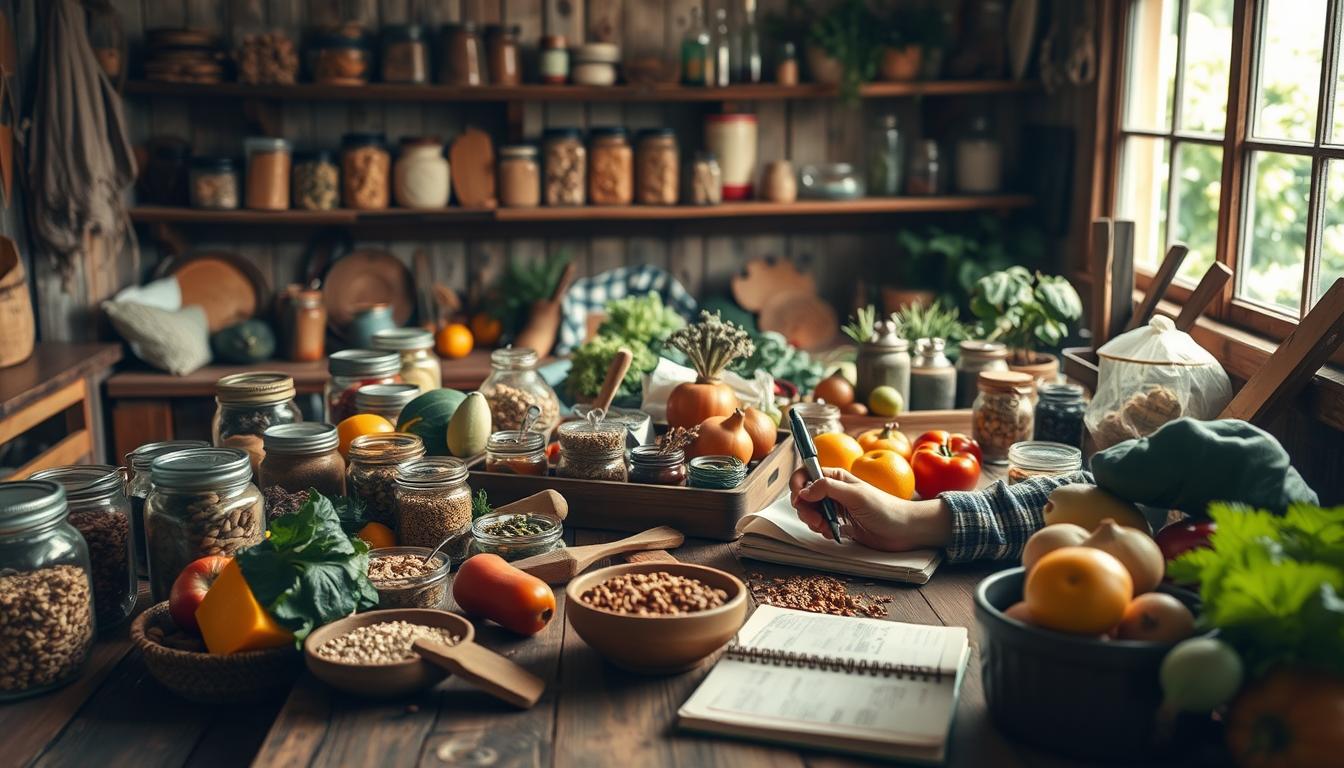
Tracking food is key to a good system. You can use spreadsheets, apps, or a notebook. These help you know what to eat first.
First In, First Out (FIFO) Implementation
The First In, First Out system is important. It means eating older food first. You can organize your storage to make this easy. Just label and date your food.
Seasonal Planning and Harvesting
Planning food around the seasons helps a lot. By preserving food, you can eat a variety of foods all year. This is great for off-grid homesteaders.
Emergency Food Supply Strategies
Having a strong emergency food supply is key for resilience during disasters. It’s important to stock up on the right foods. Also, you need good ways to store and purify water.
Calorie-Dense and Nutrient-Rich Options
It’s vital to have calorie-dense and nutrient-rich foods. Think about adding nuts, dried fruits, and long-term food storage solutions to your emergency stash.
Shelf-Stable Protein Sources
It’s also important to have shelf-stable protein sources. Good choices include canned meats, dried legumes, and freeze-dried proteins.
| Food Type | Shelf Life | Caloric Density |
|---|---|---|
| Canned Meats | 2-5 years | High |
| Dried Legumes | 5-10 years | Medium |
| Freeze-Dried Proteins | 20-30 years | High |
Water Storage and Purification Methods
Having good water storage and purification methods is also key. Use water purification tablets or filters to make sure you have safe drinking water.
[link-whisper-related-posts]Conclusion: Building Resilience Through Proper Food Storage
Proper food storage is key for off-grid homes. It helps keep a steady food supply and tackles tough times. Using Food Storage Ideas for Long-Term Off Grid like canning and dehydrating keeps diets varied and healthy all year.
Root cellars and off-grid fridges are important for keeping food safe and good. They help homesteaders not need outside food as much. This boosts their self-sufficiency.
Good food storage is essential for off-grid living. By using these tips, people can create a strong food system. This supports their health and freedom. With the right food storage and homesteading tips, they can have a reliable and healthy food supply, no matter what.
FAQ
What are the most critical factors to consider when building a root cellar for off-grid food storage?
When building a root cellar, think about location, temperature, and humidity. These help keep food fresh.
How can I optimize my pantry and storage spaces for efficient food storage in an off-grid home?
Organize food by type and store it well. Use every inch of space. Make storage fit your family’s needs.
What are the best preservation techniques for extending the shelf life of food in off-grid homes?
Use water bath and pressure canning, dehydration, smoking, fermentation, and pickling. Pick the best method for each food type.
What types of containers are suitable for long-term food storage, and what are their pros and cons?
Glass, plastic, Mylar, and food-grade buckets and barrels work for long-term storage. Each has its own benefits and drawbacks. Choose based on food type, storage, and personal taste.
How can I implement a sustainable food rotation system to ensure that stored food remains fresh?
Keep track of your food. Use the First In, First Out (FIFO) method. Plan storage and use around seasonal produce to avoid waste.
What are the essential components of an emergency food supply for off-grid homes?
Your emergency food should include foods high in calories and nutrients. Include shelf-stable proteins. Don’t forget a plan for water storage and purification.
How can I maintain a steady supply of fresh produce throughout the year in an off-grid home?
Build a root cellar and use canning, freezing, and dehydrating. These methods keep produce fresh all year.
What are some effective strategies for organizing and managing food storage in small off-grid homes?
Use multi-purpose areas and vertical storage. A “zone” system helps keep food organized in small spaces.

Subscribe to Our Newsletter